LOADING
Cycle and waiting
Connect the pit, equipment and ore flow. AOI combines visual evidence, process data and operating context to support safety, productivity, continuity, recovery and material control in open-pit mining.
Prioritize a mine use case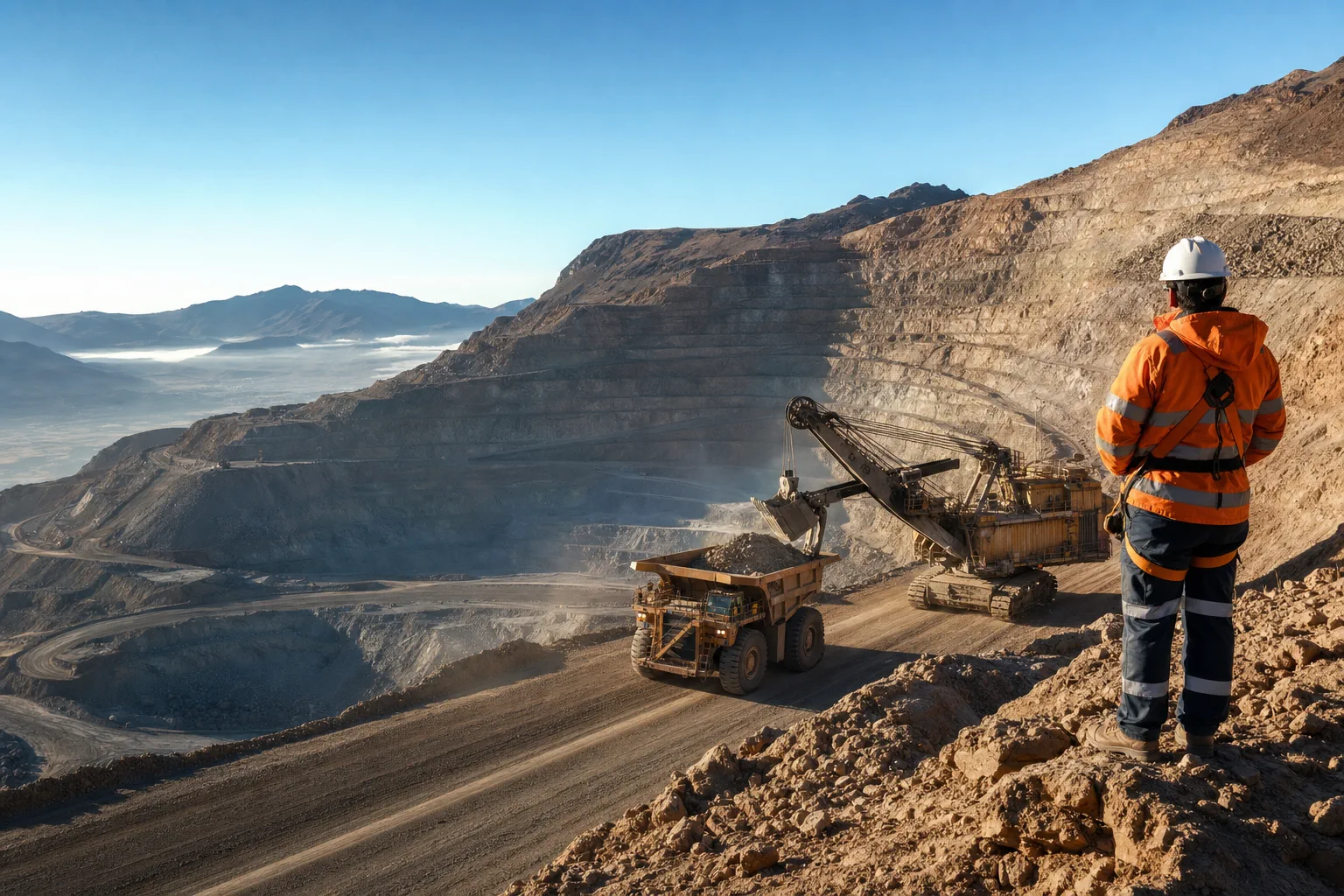
A shared view of safety, cycles, condition and material for supervisors, operations and maintenance.
Cycle and waiting
Condition and events
Exposure and zones
Quality and dilution
RGB, thermal, LiDAR and operating data.
States, sequences and process relationships.
Trends, anomalies and likely deviations.
Actions with operational evidence and context.
AICE OBSERVES›AOI UNDERSTANDS›PREDICTIVE ANTICIPATES›AI PROCESS OPERATOR RECOMMENDS
Start with an operational problem and connect the signals, assets and indicators needed to evaluate it.
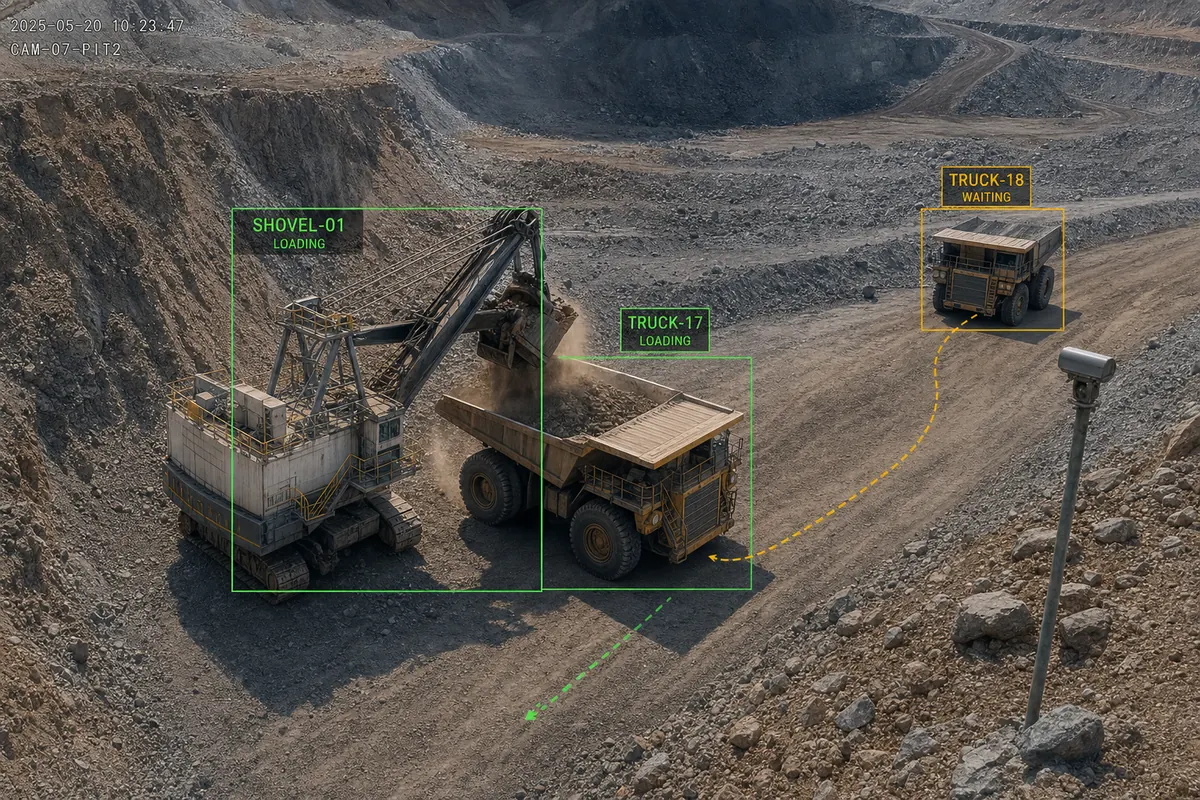 AOI / LOADING AND HAULAGE
Measure the actual sequence to reduce variation across truck positioning, loading and departure.
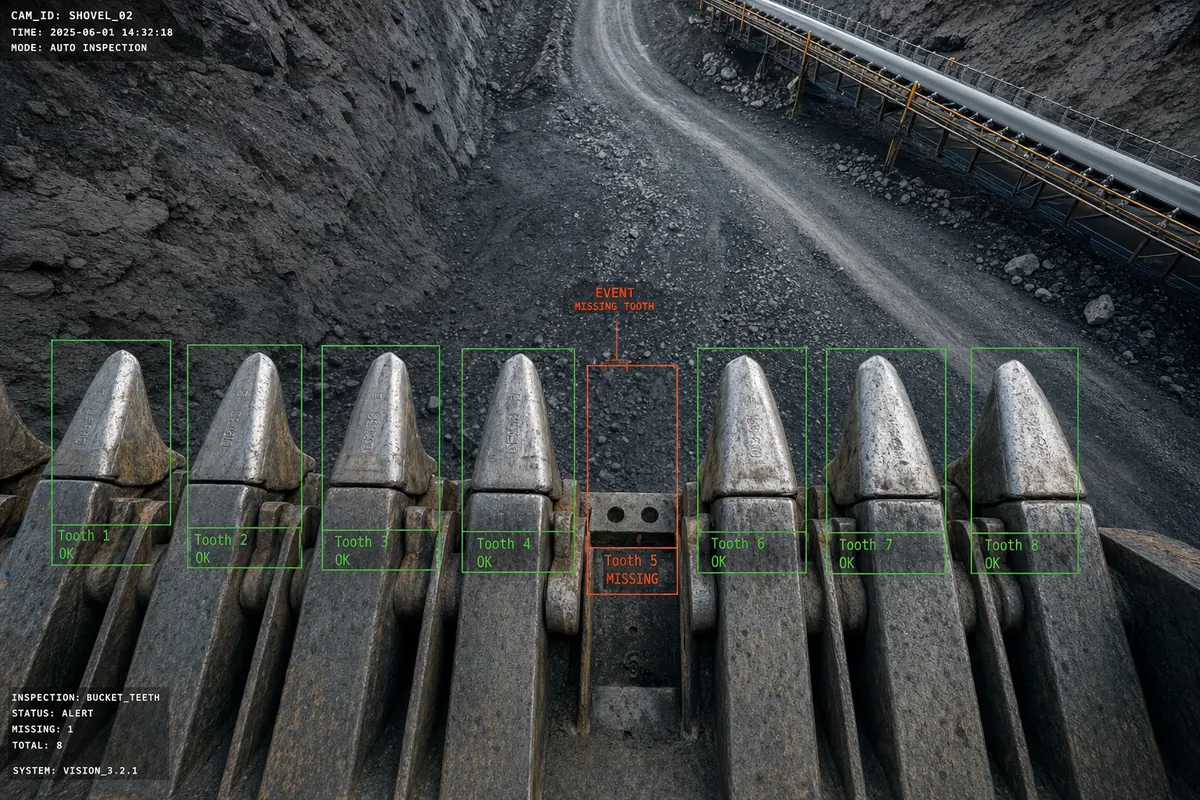 AOI / BUCKET · TRAMP-MATERIAL PREVENTION
Identify missing teeth or visible changes, then relate the event to material that may have entered the circuit.
Detection depends on visibility and coverage. An automatic stop requires integration and interlocks validated by the mine.
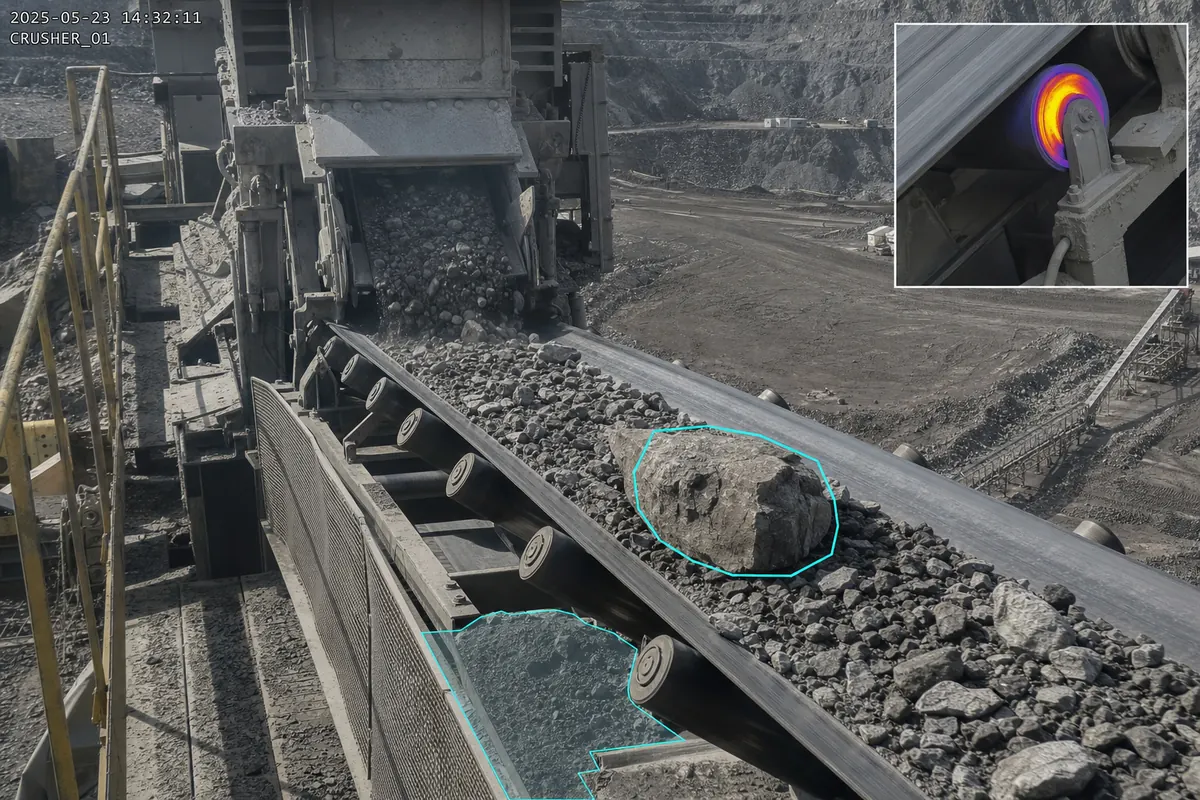 AOI / CRUSHING AND CONVEYING
Visibility into buildup, visible tramp material and conditions that may affect continuity.
Thermal measurement requires configuration by asset, emissivity and viewing conditions.
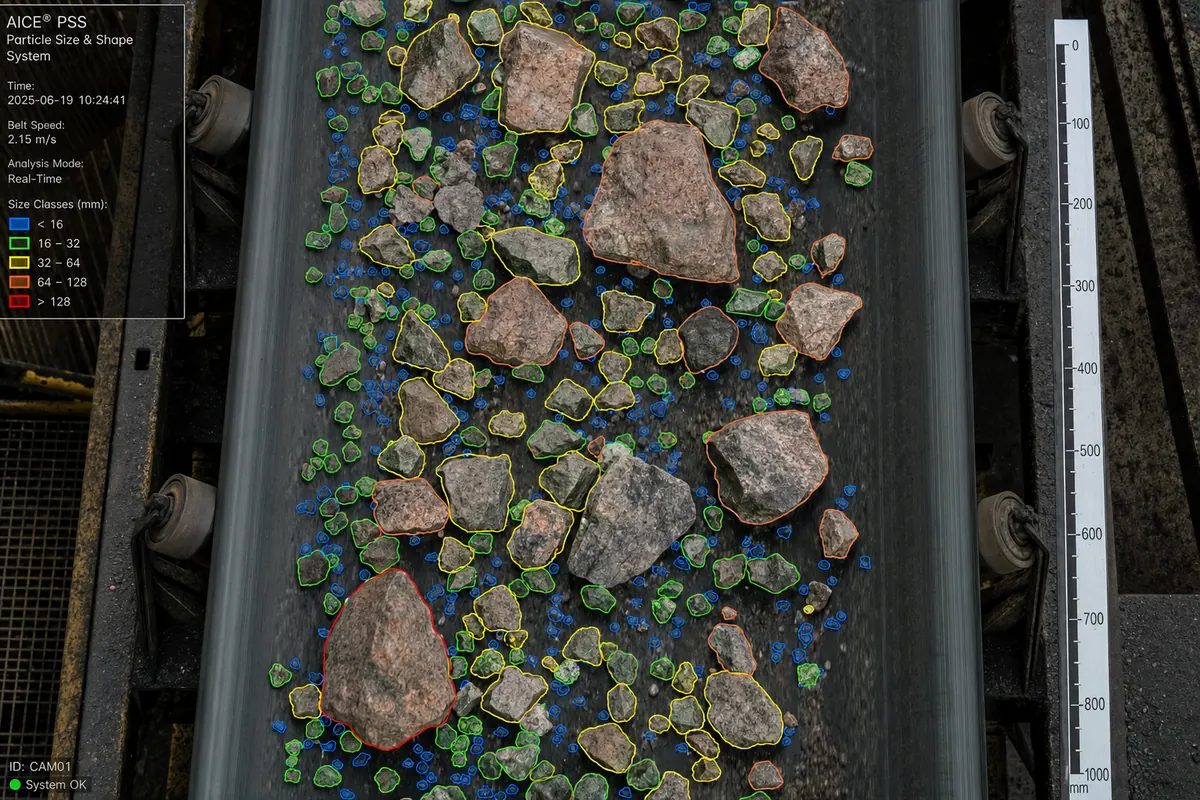 AOI / CONVEYOR PARTICLE-SIZE ANALYSIS
Estimate apparent ore size on the conveyor and track its size distribution during operation.
Surface-based visual measurement requires scale, lighting and sieve validation. Hidden material and fines that are not visible limit the estimate.
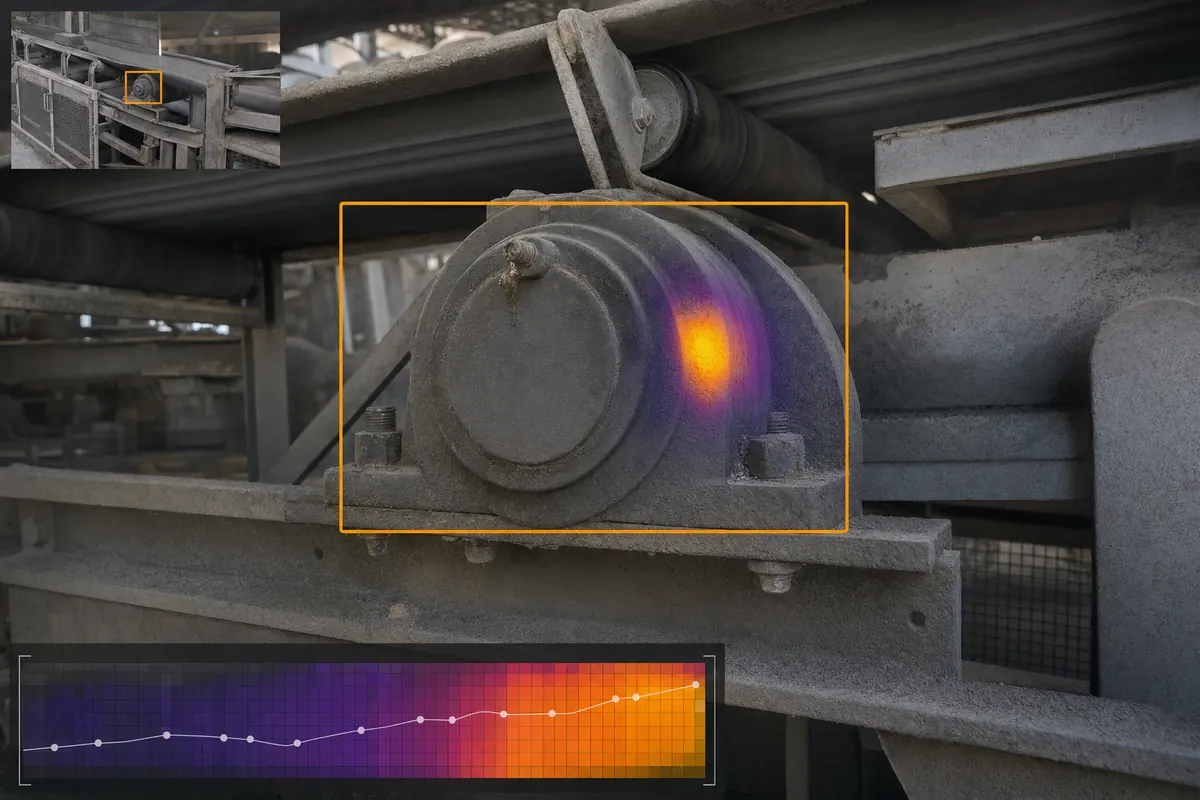 AOI / CRITICAL-ASSET CONDITION
Relate video and Thermal Analytics signals to asset history and evolution to prioritize inspection.
A video scene does not measure temperature or confirm a failure. Models and thermal measurements are validated for each asset.
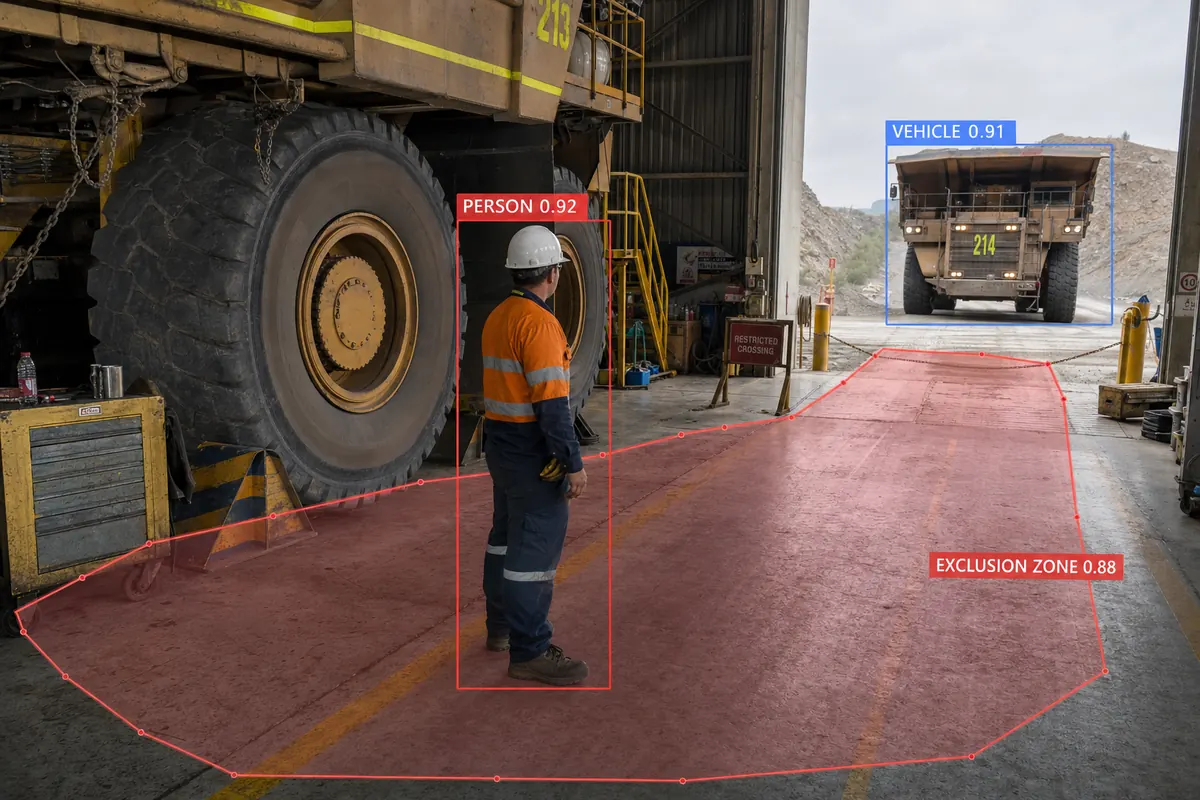 AOI / SAFETY AND MAINTENANCE
Presence, distance, identity and activity help focus attention on interactions and critical zones.
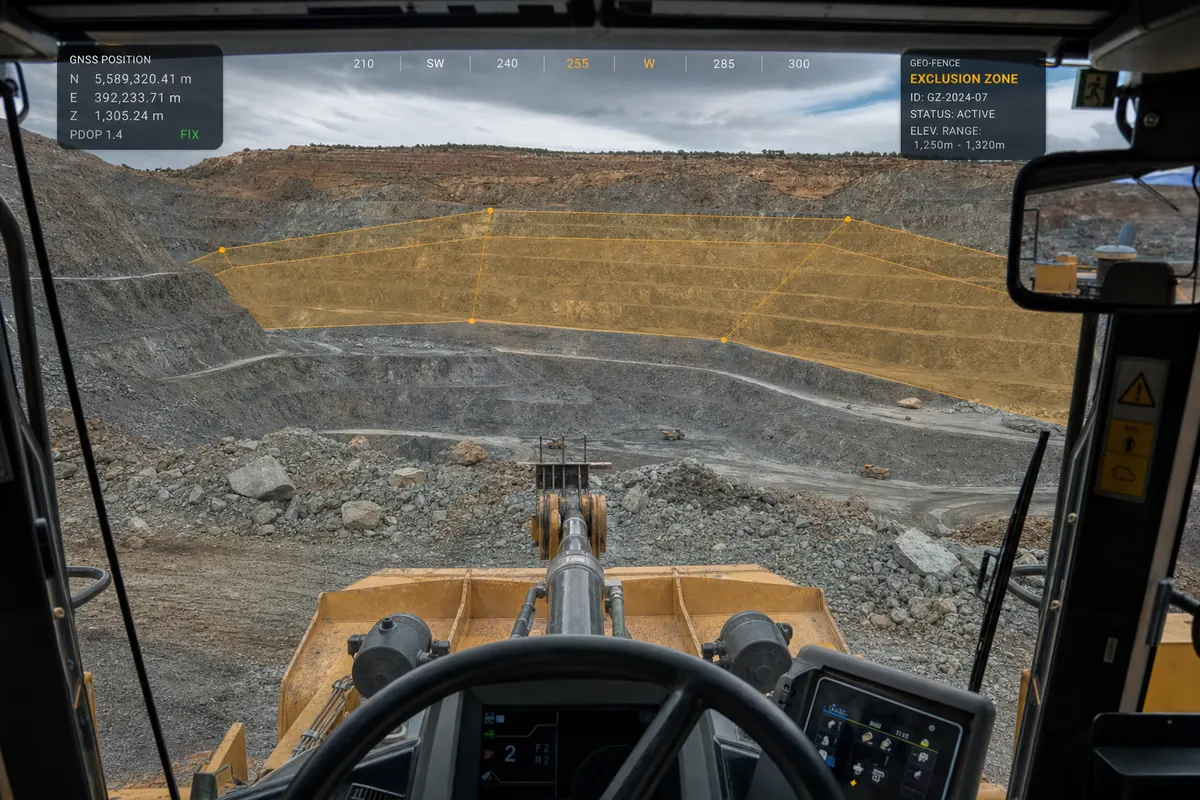 AOI / VIRTUAL GEOTECHNICAL MARKING
Augmented reality and georeferencing display zones approved by Geotechnical teams and may reduce exposure while marking them in the field.
Proposed integration use case. Geotechnical teams approve zones; accuracy and usability are validated on site. It does not replace slope-stability monitoring systems.
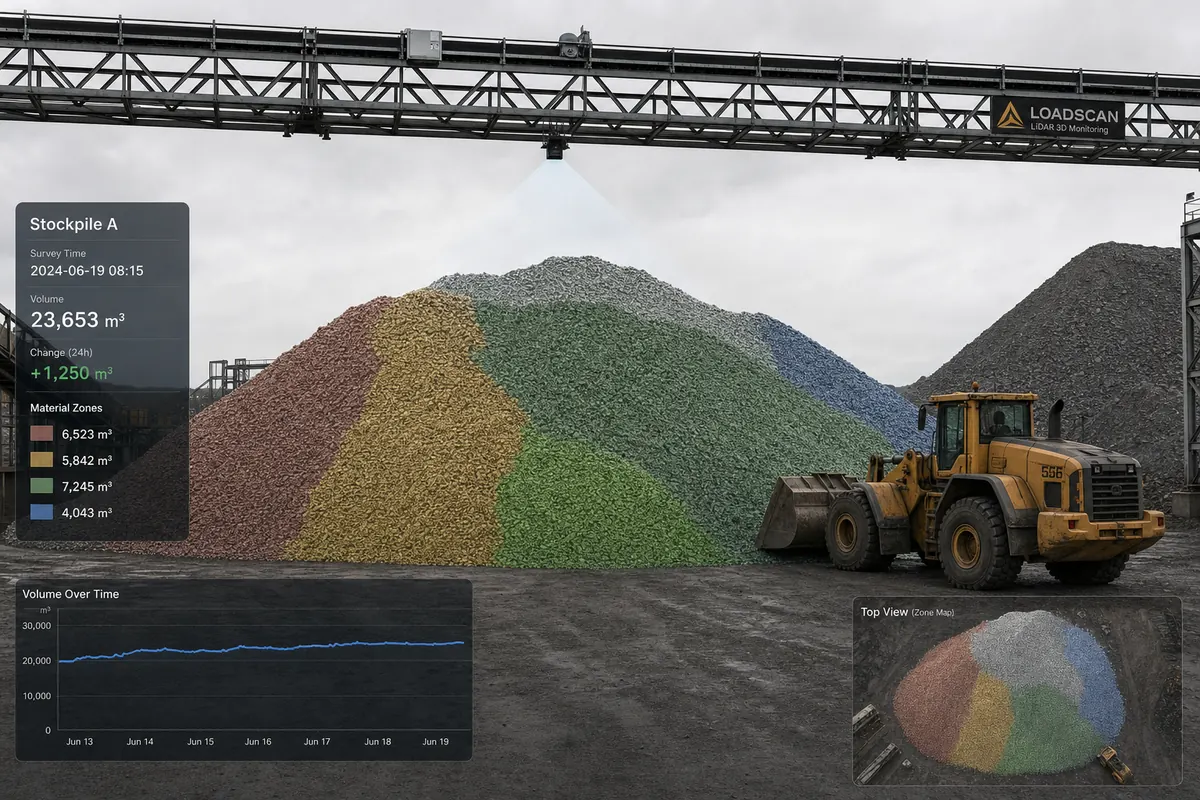 AOI / STOCKPILES AND QUALITY
Link observable ore condition to its location, movement and destination.
Visual appearance does not replace an ore-grade assay. Classification and inventory require calibration and validation against mine data.
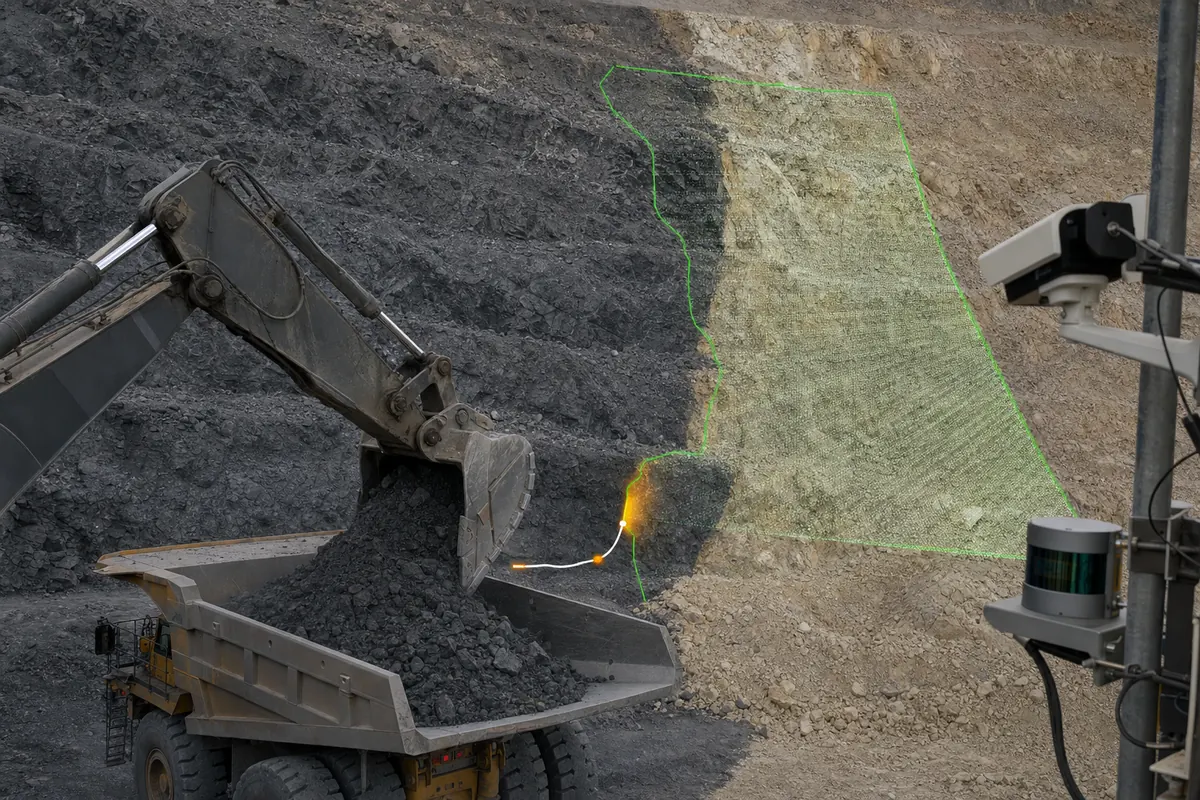 AOI / LOADING DILUTION CONTROL
LiDAR, AI vision and the mine plan relate bucket position to target material.
Ore/waste classification must be validated for the mine geology and visual conditions.
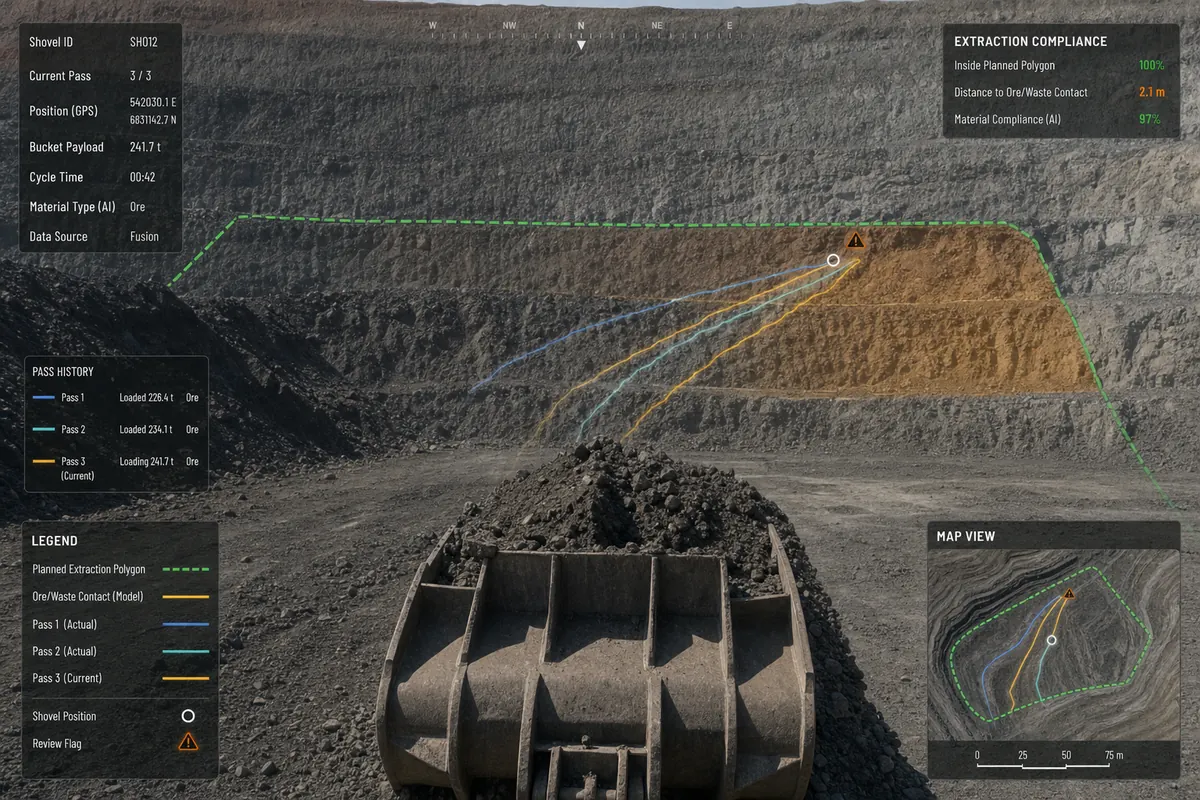 AOI / DILUTION SCORE · RECOMMENDATION
A conceptual indicator to prioritize cycles and contacts with greater dilution risk.
The illustrative score is not a dilution percentage or grade measurement. Every recommendation requires operational validation.
The combination depends on the mine area, available data and the decision operations need to improve.
PPE, presence and safety events.
Sequences, timing and process states.
Temperature, trends and thermal condition.
Anomalies and anticipation of deviations.
Person-equipment interaction and defined zones.
Identity, access and event traceability.
Inspection, material and observable inventory.
Recommendations and operational learning.
Integration with dispatch, historians and plant systems depends on the interfaces available.
Camera coverage, lighting, scale, asset calibration, process data and available interfaces define each use case. Alerts and recommendations are validated with responsible teams before actions are automated.
Define the use case, evidence and indicators to bring AOI into your mine operation.
Safety, continuity or dilution.
Sources, coverage and acceptance criteria.
Compare results and extend across assets.