SAFETY
People and exposure
Connect safety, process, assets and product in one operational view. AOI brings visual evidence, plant data and context together for supervisors, metallurgy, maintenance and the control room.
Discuss a mining plant use case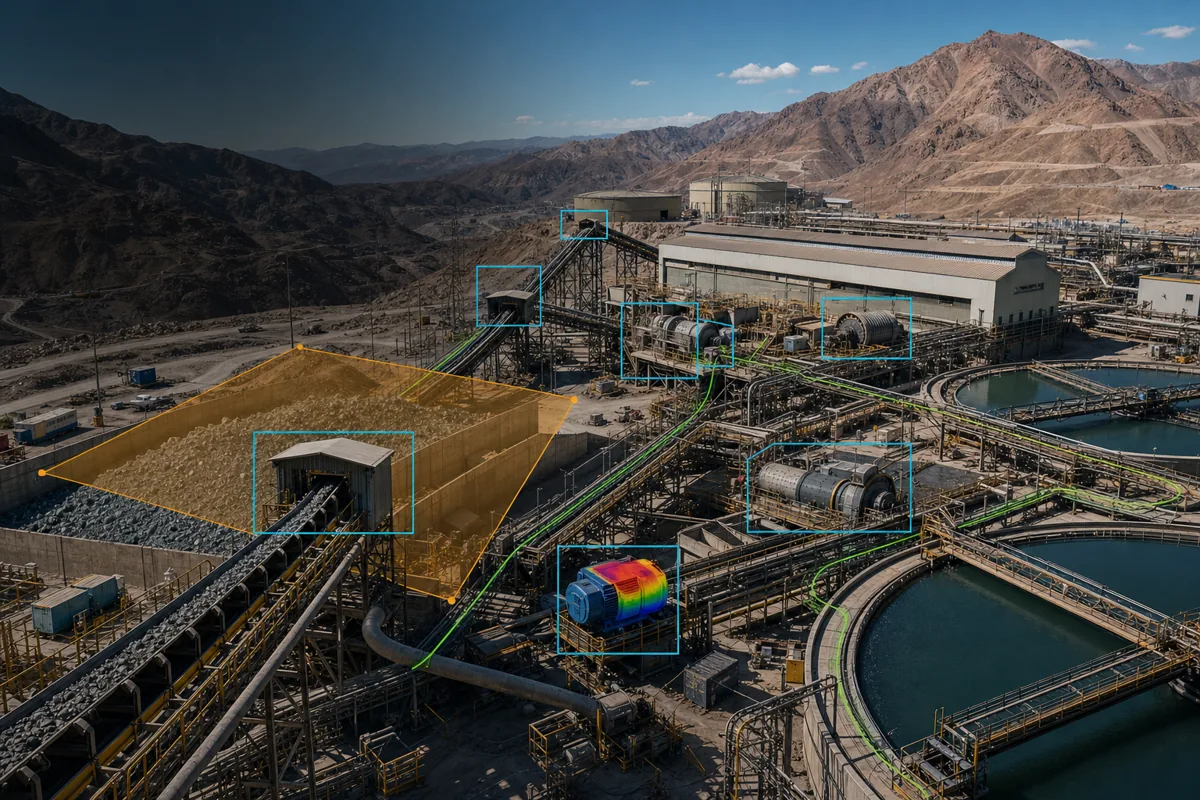
Four connected perspectives to understand operating conditions and decisions.
People and exposure
Assets and transfers
Stability and constraints
Quality and traceability
Turns visual and sensor sources into observable entities, states and events.
Relates events to assets, areas, shifts, lots and process conditions.
Looks for trends and deviations with models validated for the use case.
Proposes actions with evidence, constraints and expected verification.
OBSERVE›CONTEXTUALIZE›ANTICIPATE›RECOMMEND
Local Edge capture and processing are defined by design. Integration with DCS, PLCs, historians, LIMS and CMMS depends on available interfaces.
Selection depends on the flowsheet, operational priority and available sources at each site. Concentration and leaching are different process routes and may not coexist.
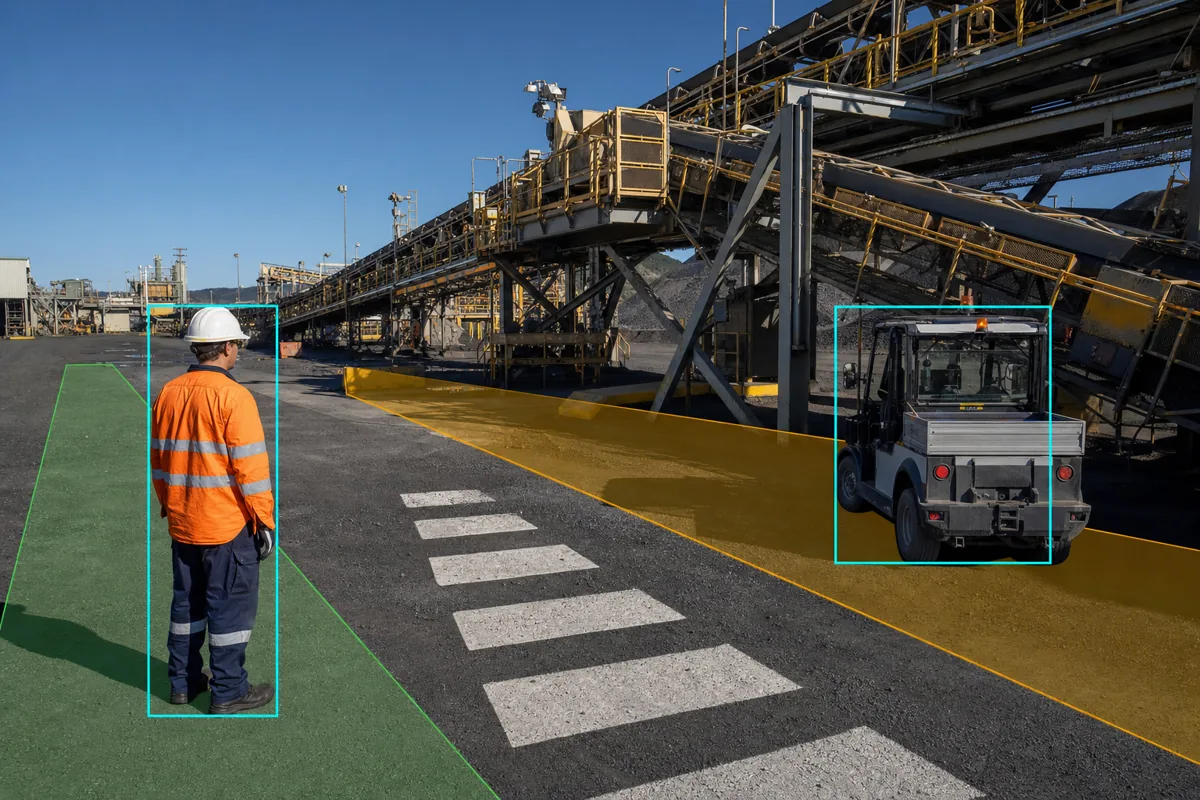 AOI / SAFETY AND ACCESS
Identify exposure around conveyors, crossings, walkways and maintenance areas so attention is directed where it is needed.
Validate coverage, occlusions and distances. Visual observation does not verify energy isolation.
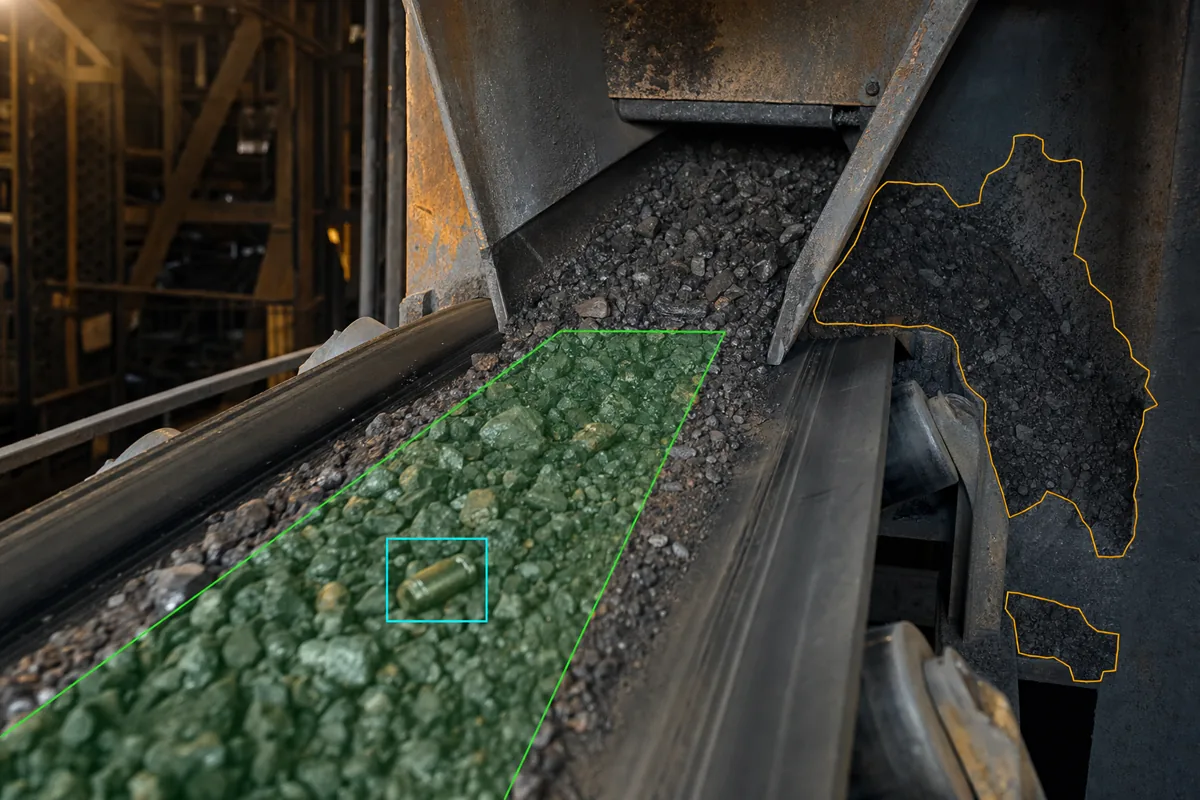 AOI / CRUSHING, CONVEYORS AND CHUTES
Make blockages, spillage and exposed objects visible before a local anomaly affects plant feed.
Vision identifies exposed objects and does not replace metal detectors. Automatic stops need integration and site-validated interlocks.
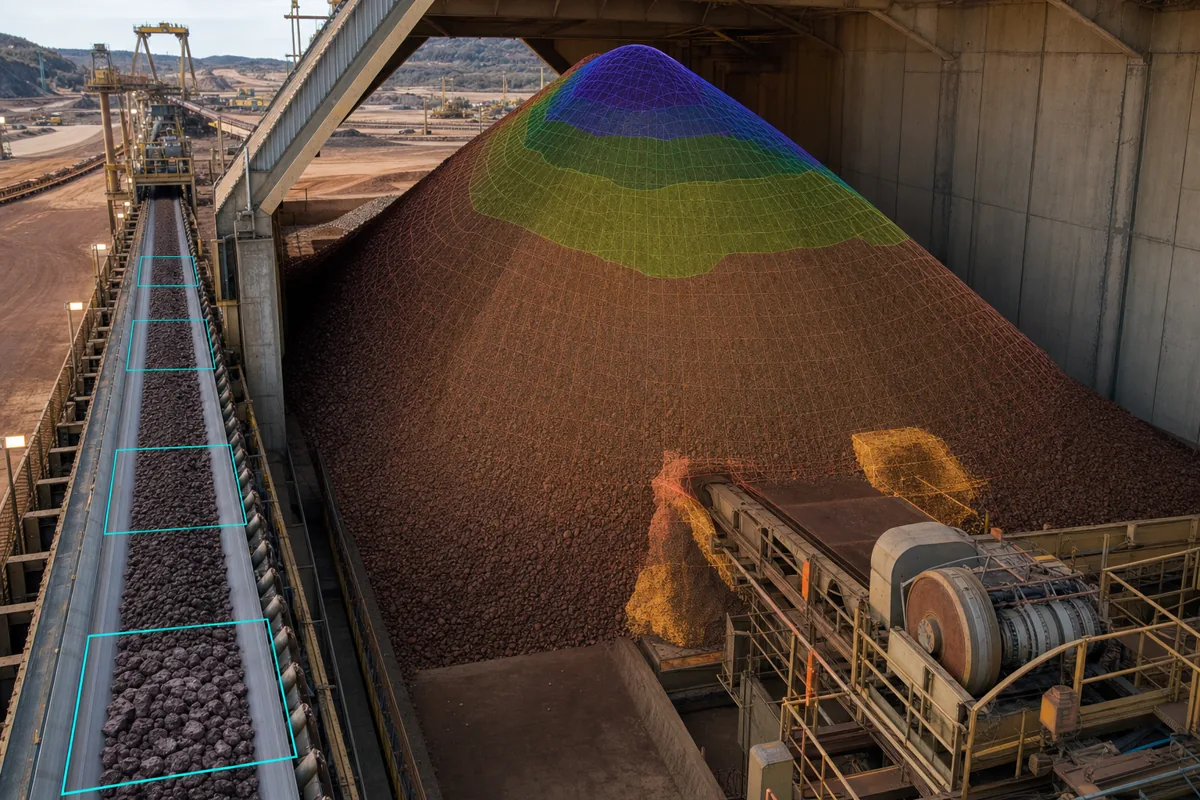 AOI / STOCKPILE AND FEED
Connect stockpile geometry and inventory with particle size and reclaim flow to support consistent feed.
Volume is not mass without validated density. Surface particle-size estimates need calibration; grade and moisture require instruments or lab data.
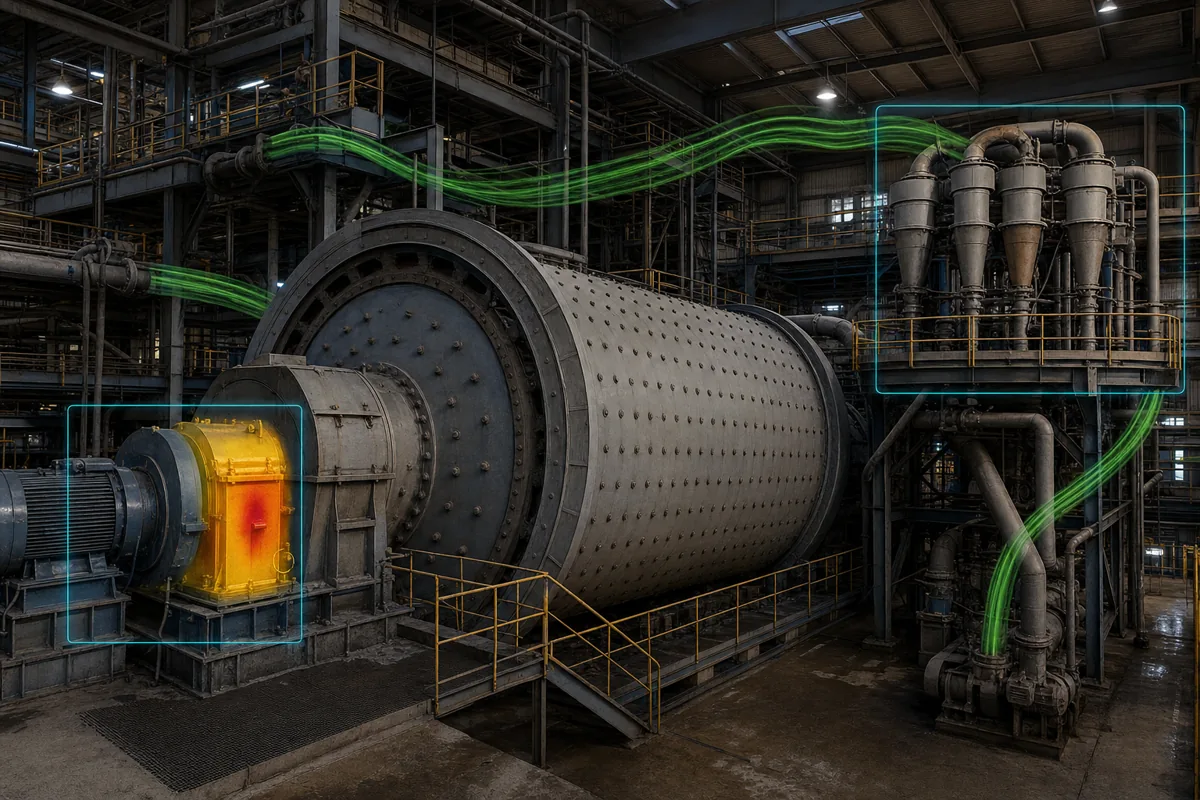 AOI / GRINDING AND CLASSIFICATION
Relate feed to circuit response to understand deviations in load, energy and classification.
Pulp P80 and internal mill load need validated instruments or models. External cameras do not measure mill load.
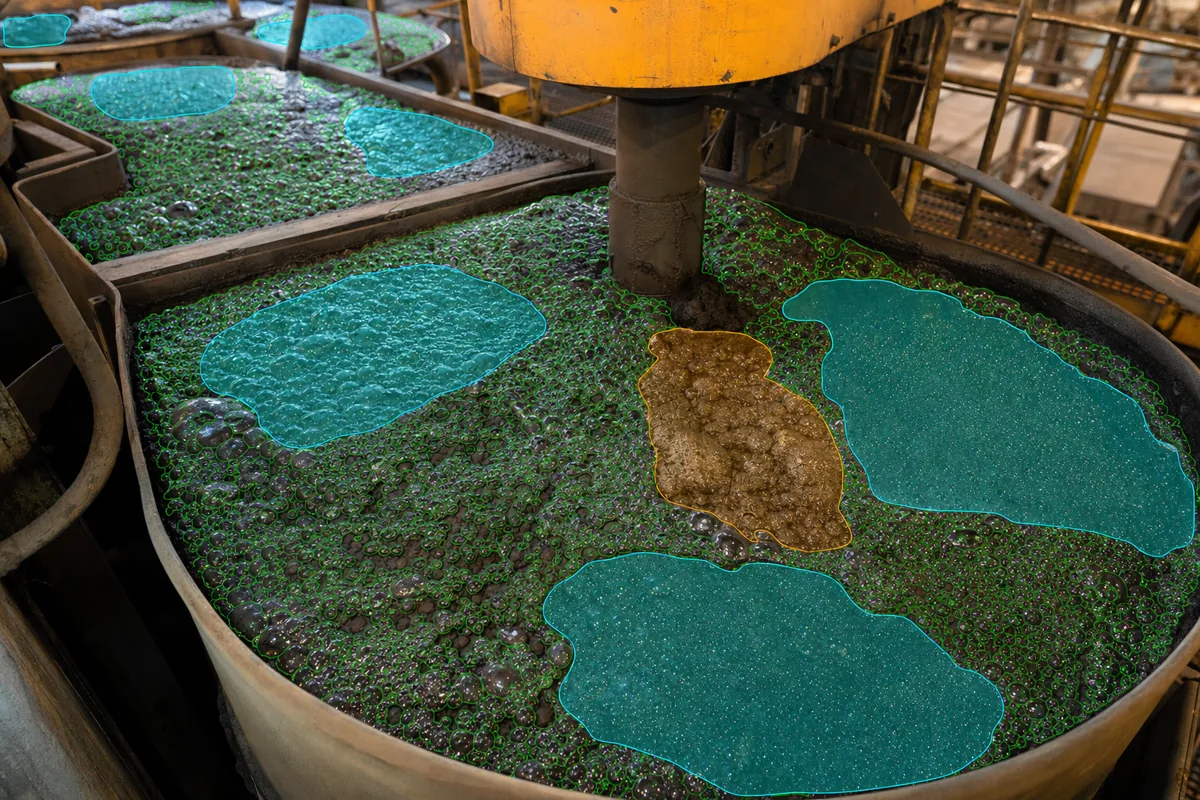 AOI / COPPER FLOTATION
Turn froth appearance and dynamics into cell- and bank-level information linked to process conditions and metallurgical results.
Froth is a process signal; grade and recovery require assays and a metallurgical balance.
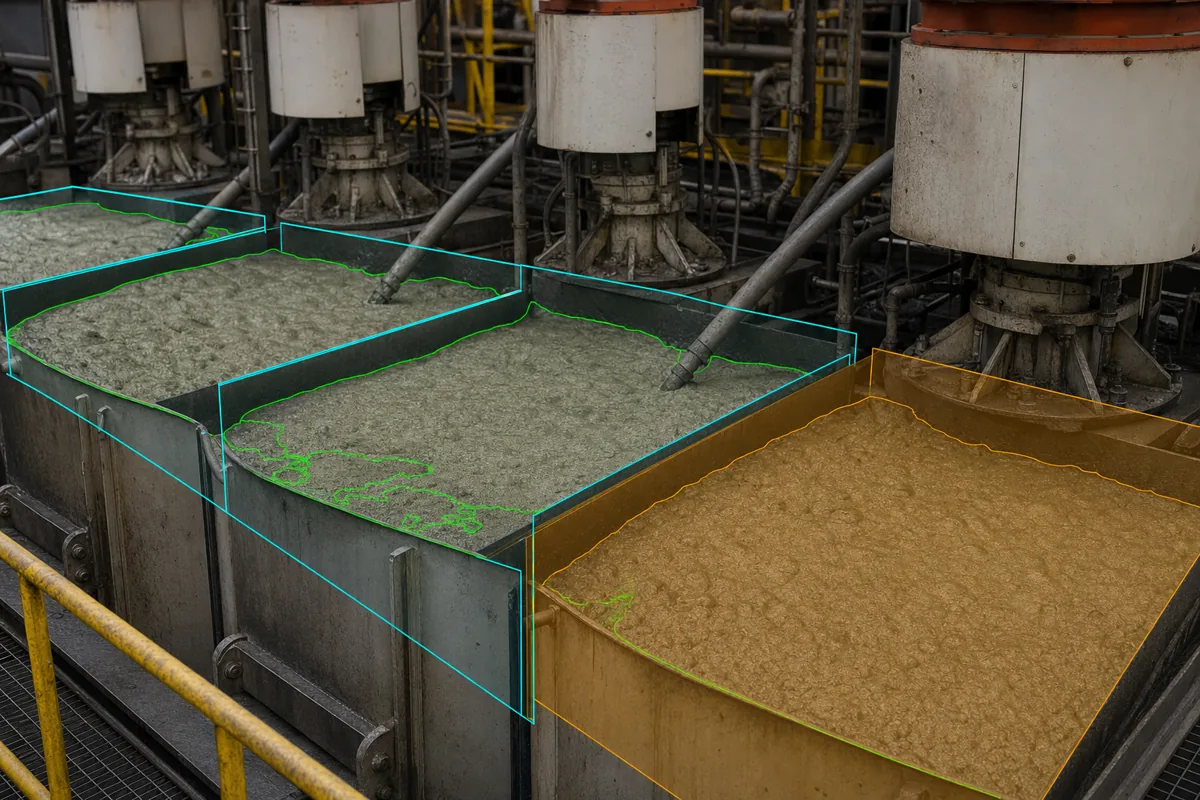 AOI / MOLYBDENUM SEPARATION
Relate froth, circuit chemistry and lab results to support stability and molybdenum concentrate quality.
Cameras do not measure selectivity or detect H₂S. Gas management needs sensors, engineering and circuit-specific procedures.
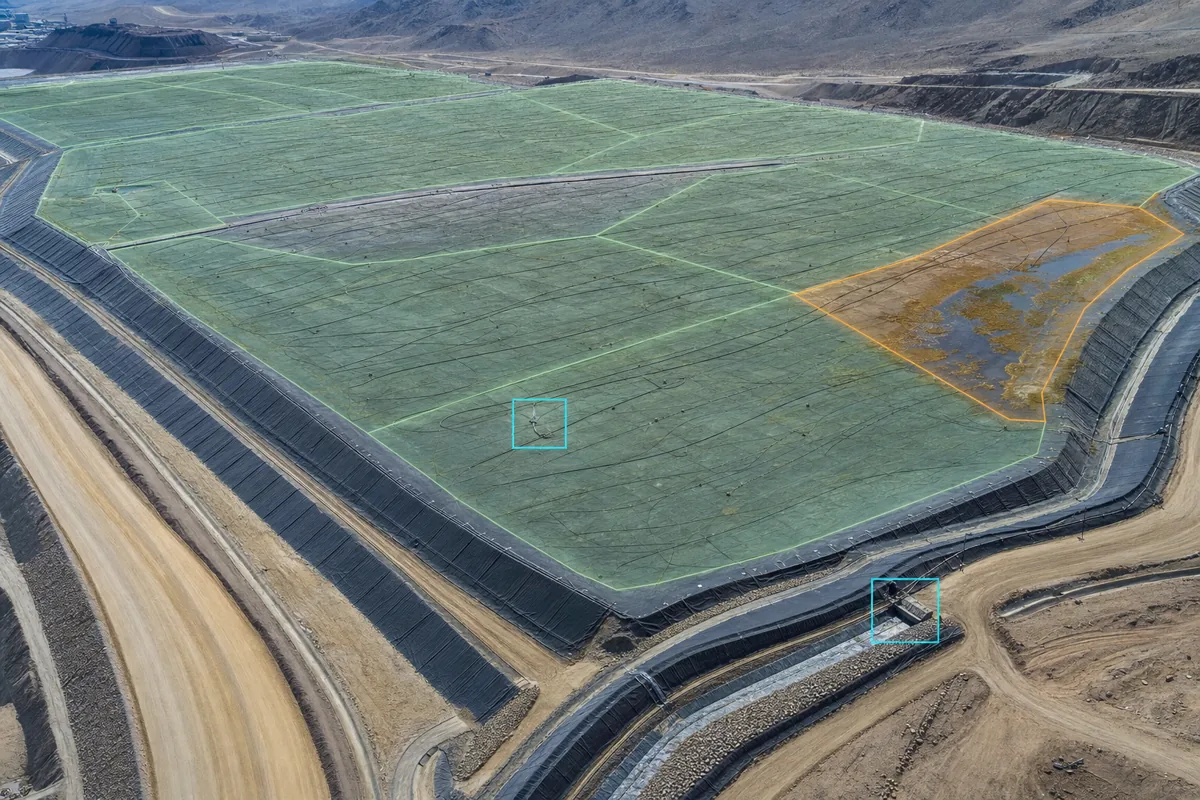 AOI / LEACHING, IRRIGATION AND CONTAINMENT
Locate unusual surface conditions and compare them with irrigation, flows and balances to prioritize inspections.
Surface appearance does not prove internal moisture, permeability or recovery. Check instruments, balances and field tests.
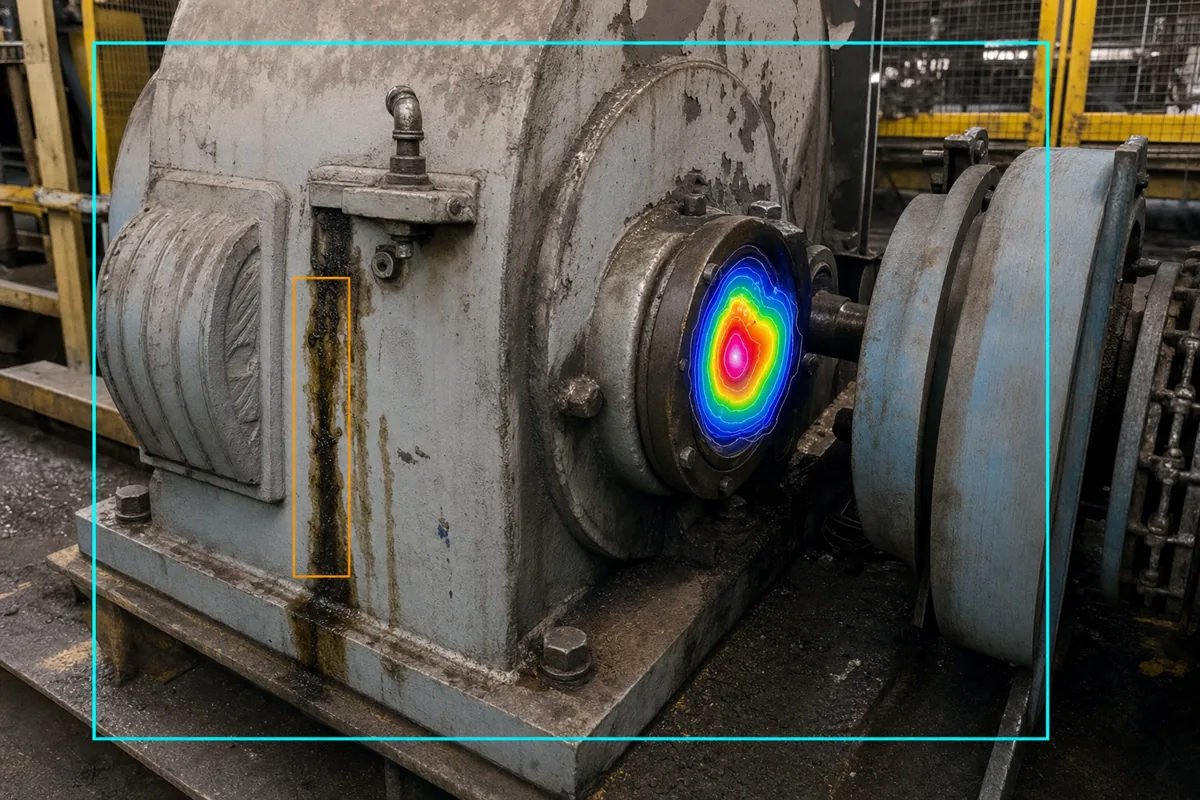 AOI / CRITICAL ASSET CONDITION
Combine Thermal Analytics and Predictive Intelligence to recognize persistent deviations under comparable conditions.
An anomaly does not confirm failure. Account for emissivity, reflections, distance and load; remaining life needs asset-specific history and validation.
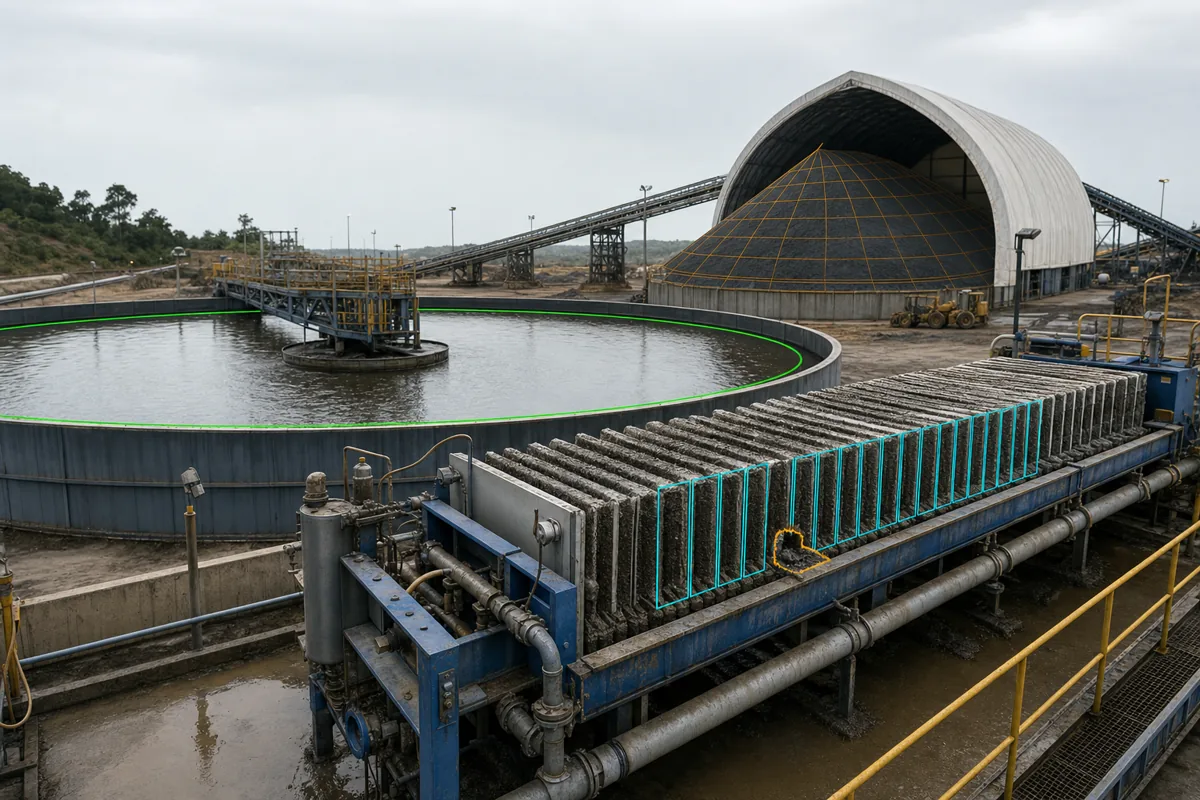 AOI / THICKENING, FILTRATION AND INVENTORY
Follow thickening and filtration continuity, and reconcile concentrate movement with its condition, lot and inventory.
RGB does not measure moisture or grade. Converting volume to mass needs validated density and comparable reconciliation bases.
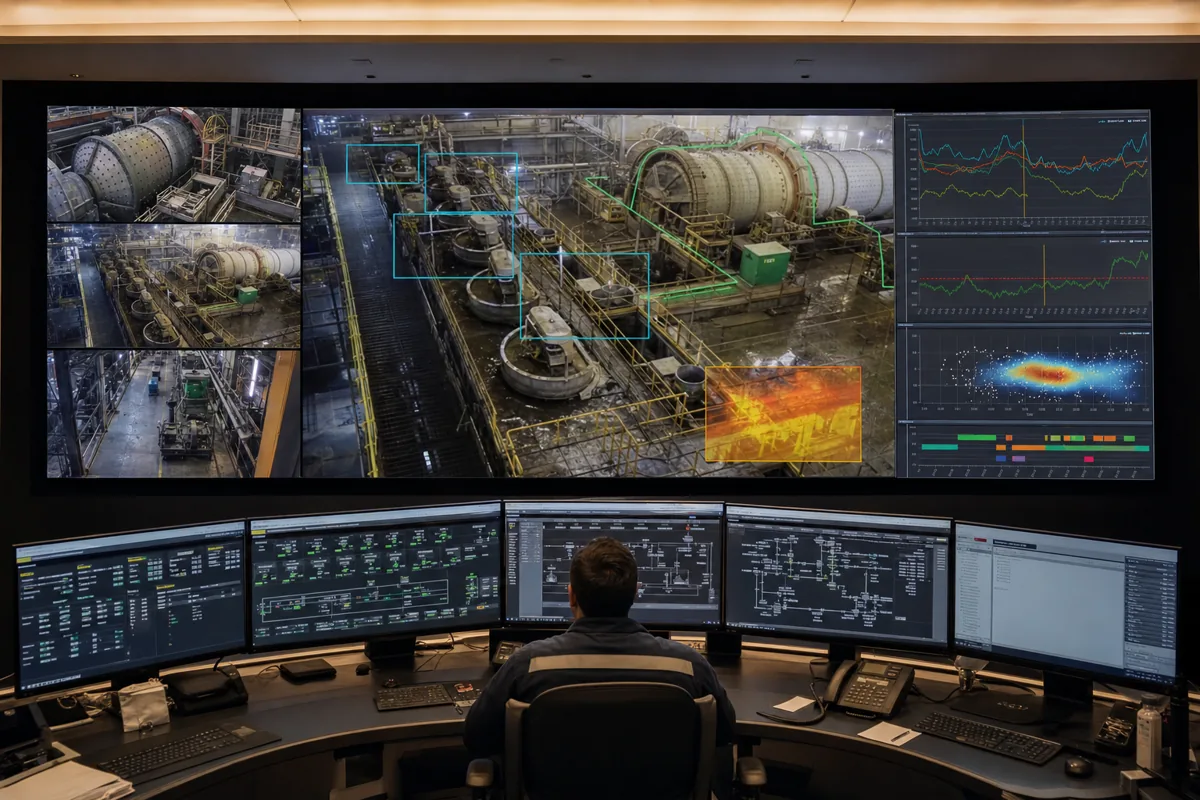 AOI / AI RECOMMENDERS AND OPTIMIZERS
AI Process Operator and MINCORE combine AOI evidence with process models to evaluate alternatives within approved operating windows.
Advisor mode with human approval. Optimization and closed-loop control need validated models, constraints, permissions and interlocks.
AICE provides observation; AOI organizes context and traceability to connect signals with a concrete decision.
People, PPE and exposure in defined zones.
States, sequences and relationships across stages.
Surface thermal condition and trends.
Anomalies, persistence and validated anticipation.
People-equipment interaction and calibrated zones.
Access traceability by credential or ID.
Particle size, product inspection and reconciliation.
Recommendations, constraints and action outcomes.
Edge capture and processing are defined by design. Integration depends on available interfaces, permissions and data quality.
Applications are configured and validated for each site. Images and video do not replace instruments, assays or safety procedures: particle size, mass, moisture, grade, internal mill load, selectivity and equipment failure need specific references. Brochure indicators are proposed validation measures, not measured results.
Define the plant’s first control point from a loss, its available sources and the decision to improve.
Priority area and loss
Real sources and coverage
Decision and indicator