DRILLING & WORKOVER
Relate maneuvers, assets, crews and timing to review events in context.
Connect visual evidence, thermography and industrial signals to review assets, maneuvers and operational exposure across drilling, production and terminals.
Design a use case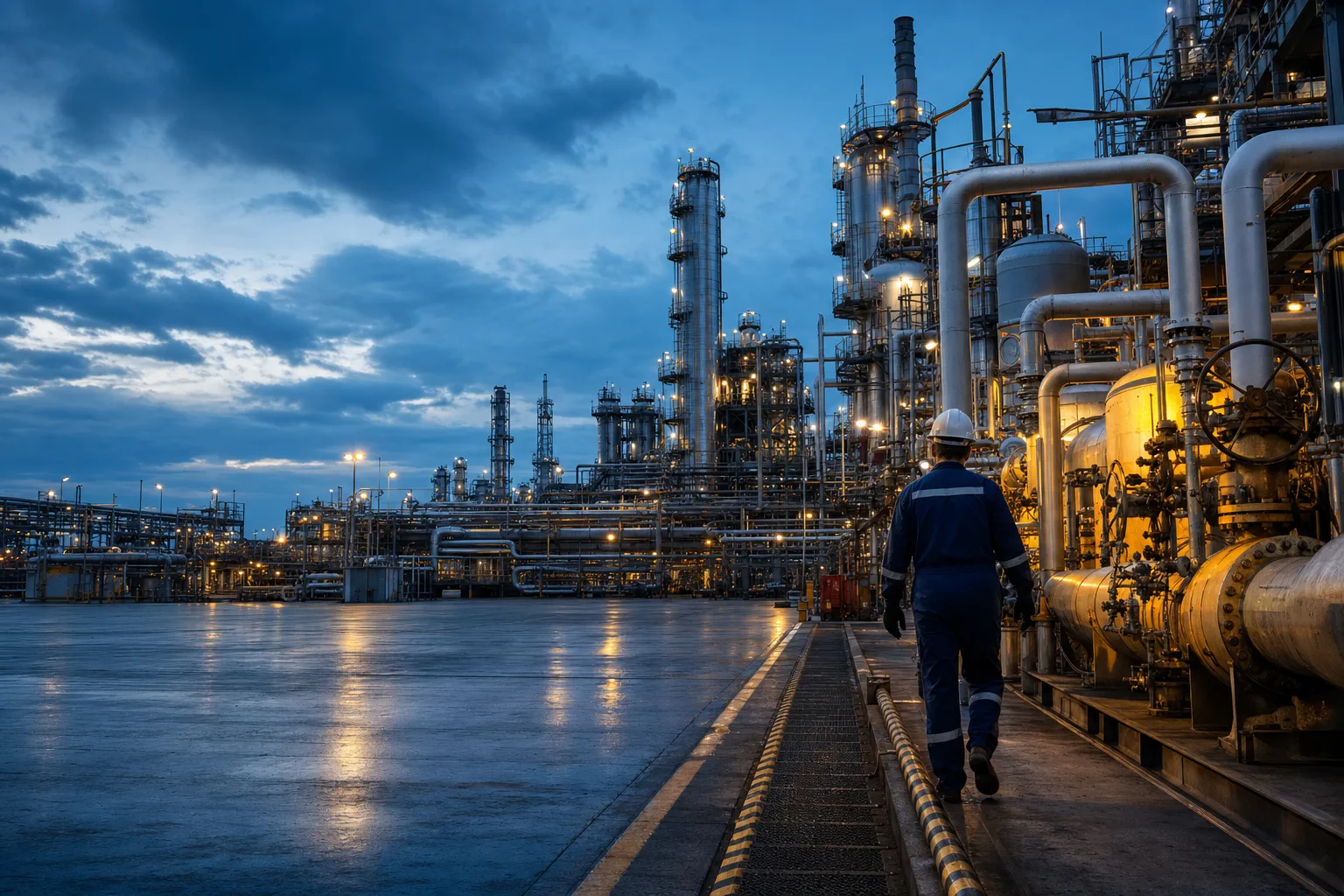
In Oil & Gas, an image needs context: which asset was operating, which maneuver was underway and which signals were available at the time.
Relate maneuvers, assets, crews and timing to review events in context.
Connect visible and thermal conditions with instrumented variables and equipment state.
Organize occupancy, sequences and interactions across covered positions and zones.
Keep images, camera, zone, asset, shift and available signals together for review.
The brochures describe configurable applications for drilling, production, terminals, equipment and access. Each case is scoped and validated against the operation’s available sources.
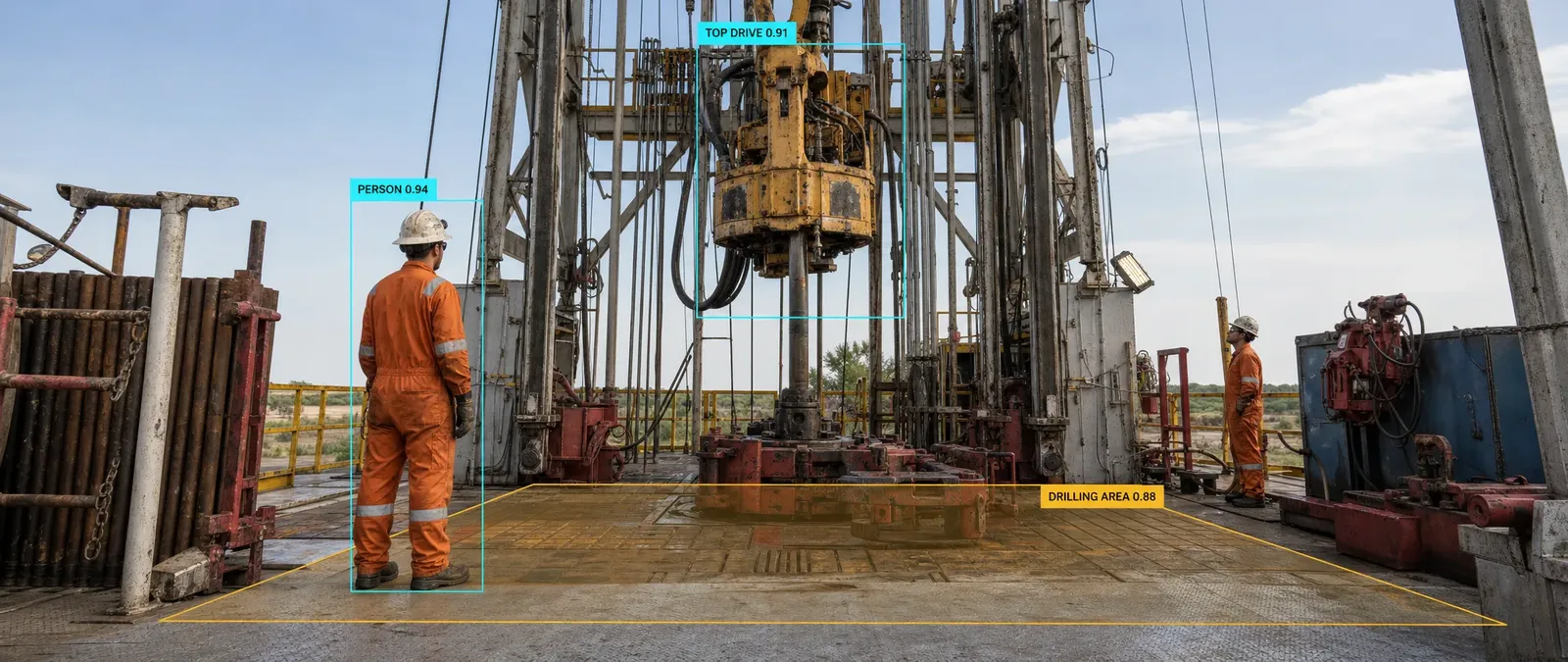 Mud pumps · crew presence · Top Drive · Traveling Block and hoisting system
Relate drilling sequences, presence in covered areas and visible equipment changes to the maneuver and operating regime.
Video can show activity, apparent position, movement and external conditions. Pressure, torque, RPM, load, vibration and equipment states come from instruments when available.
Operations and maintenance review events, compare equivalent cycles and decide on inspections under current procedures.
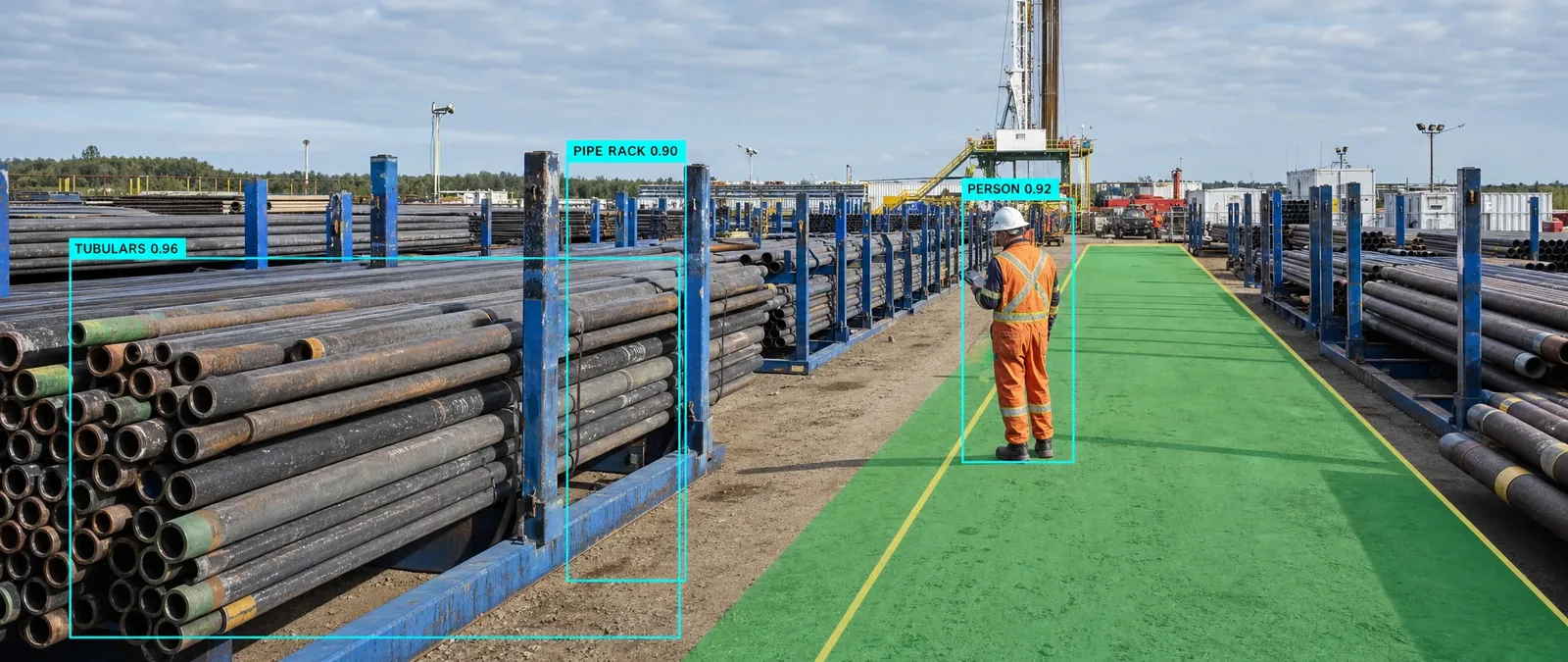 Tubulars · counts · transfers · surface condition
Record visible tubular flow and transfers during drilling and workover, relating movements to the zone and work stage.
Counts and surface-defect classes depend on resolution, orientation and lighting. A time match alone does not identify each tubular.
The responsible team reconciles differences and refers surface observations for inspection. Per-piece identification and fitness decisions require additional validation.
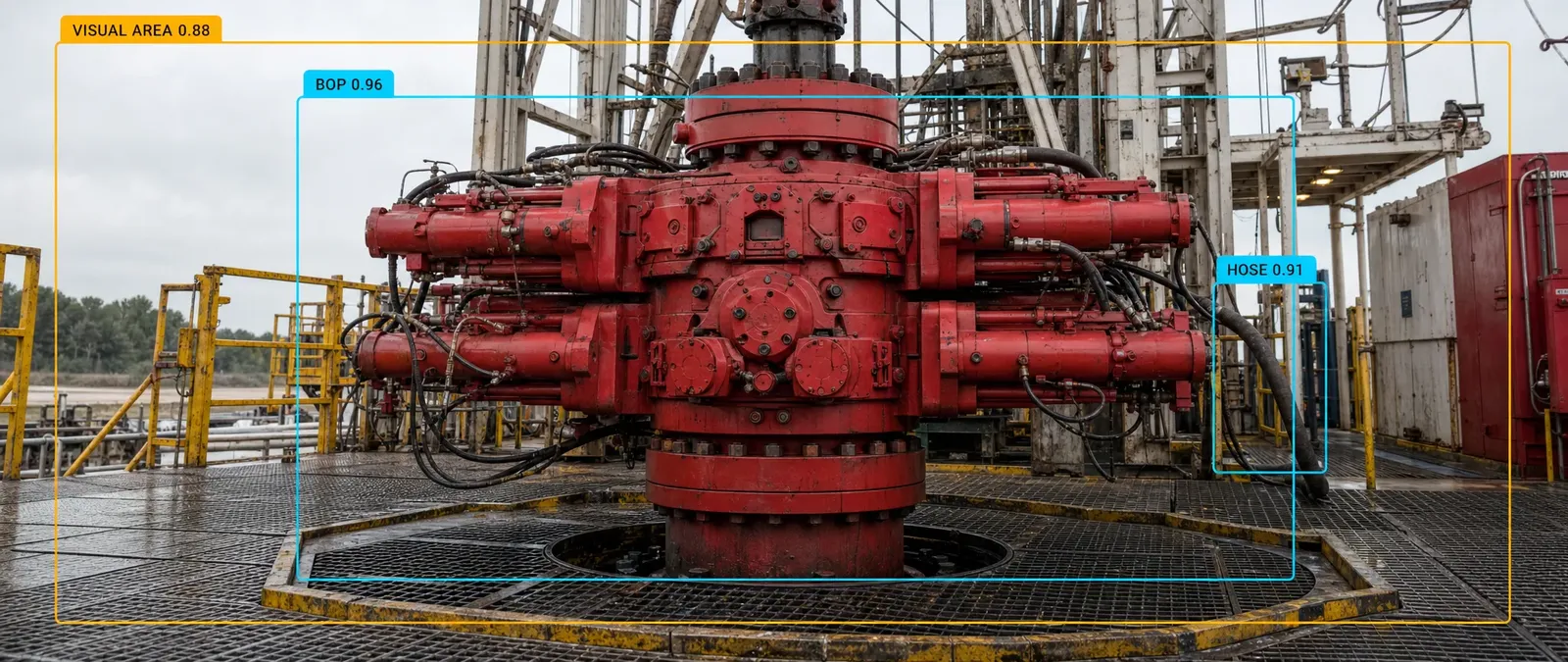 Blowout preventer · hoses · external changes
Keep evidence of visible external conditions and changes over time, tied to the asset, zone and available signals.
Visible changes, foreign objects and surface liquid accumulation when the view and resolution allow. Pressure and equipment state come from instrumentation.
Operations and maintenance confirm findings and decide on inspections. Imagery does not certify BOP integrity, internal condition or protective capability.
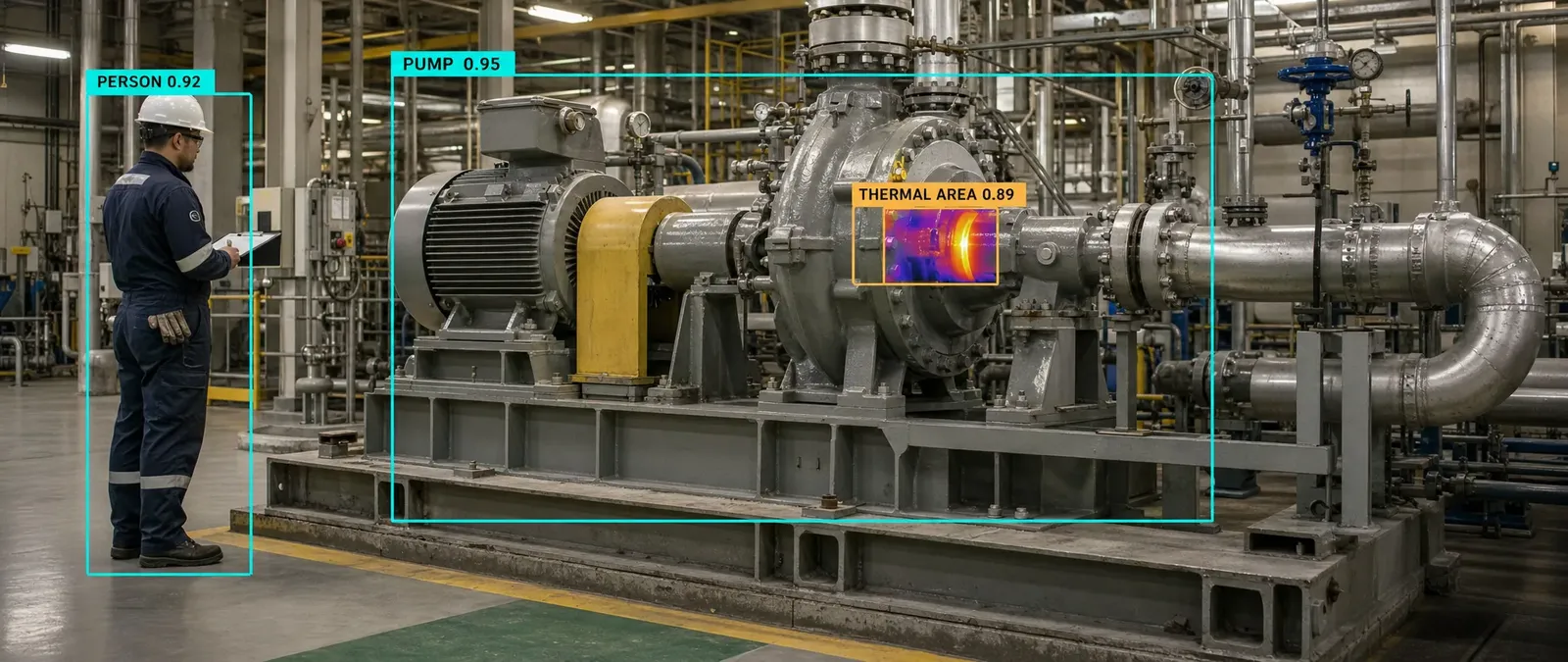 Pumps · compressors · furnaces · thermal surfaces
Relate visible changes and surface temperature to load, state and industrial variables to guide an asset review.
Temperature requires suitable radiometric cameras, configured regions and comparable references. Flow, pressure, load and vibration must come from their instruments.
Maintenance verifies the measurement and decides whether to inspect. A thermal trend alone is not a failure diagnosis.
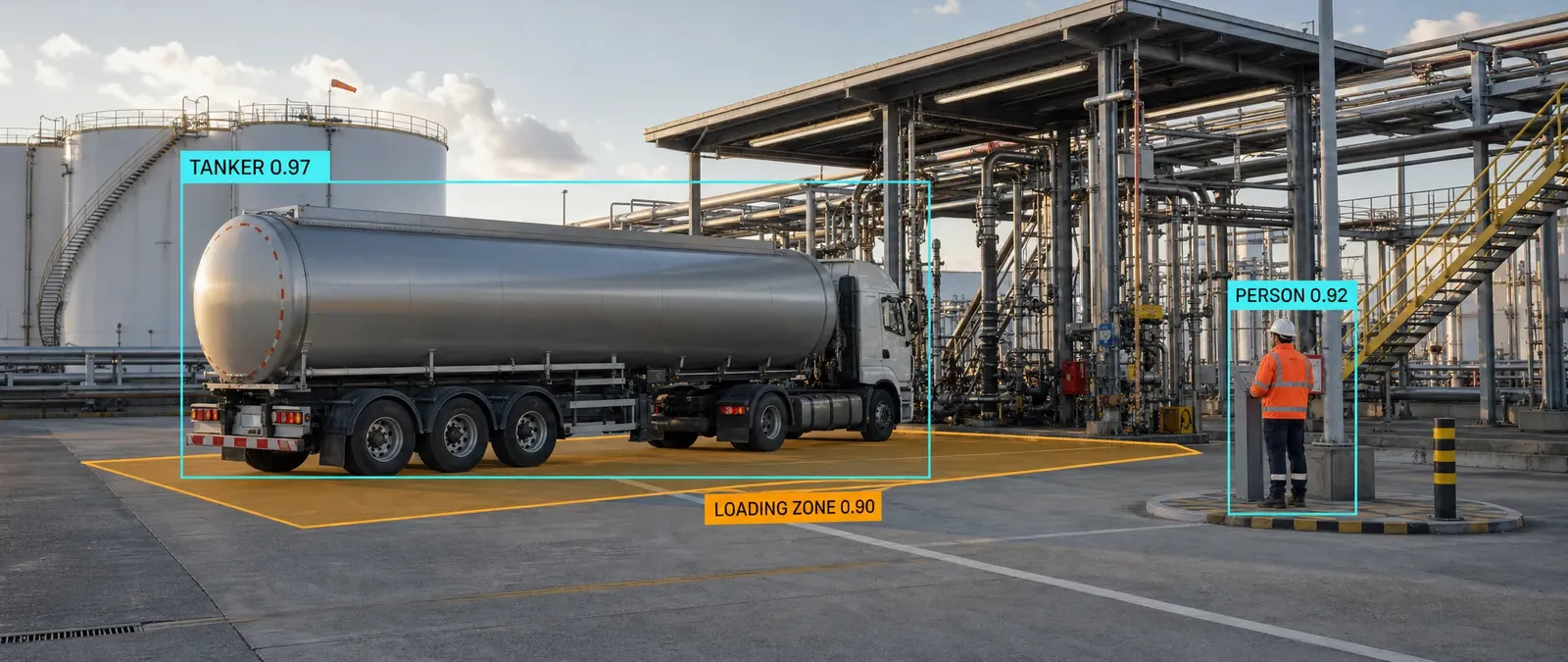 Positions · activity · dwell time · interactions
Observe sequences and occupancy in covered positions to review waiting, congestion and interactions during terminal and loading operations.
Entries, exits, visible activity start and end, people and vehicles in defined zones, and available industrial states.
Supervisors validate events and coordinate positions and service according to site rules and responsibilities.
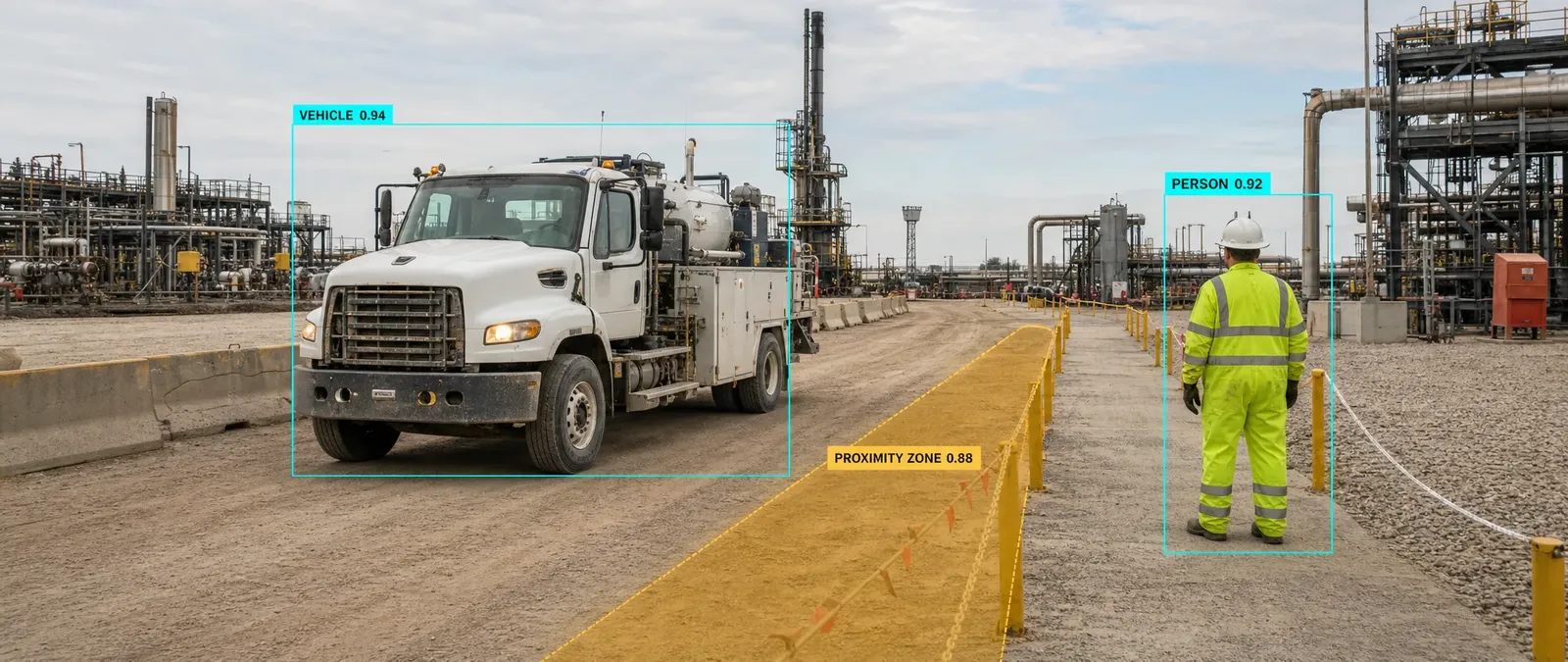 Person–equipment interaction · maneuvers · defined zones
The AICE PA Kit combines four equipment-mounted cameras with AOI Proximity Awareness to observe interactions and review events.
Views, zones, alerts and coverage are engineered for the equipment geometry and maneuvers; visibility and communications affect review.
The operator remains responsible for maneuvers and response. Four cameras do not imply complete coverage or automatic collision avoidance.
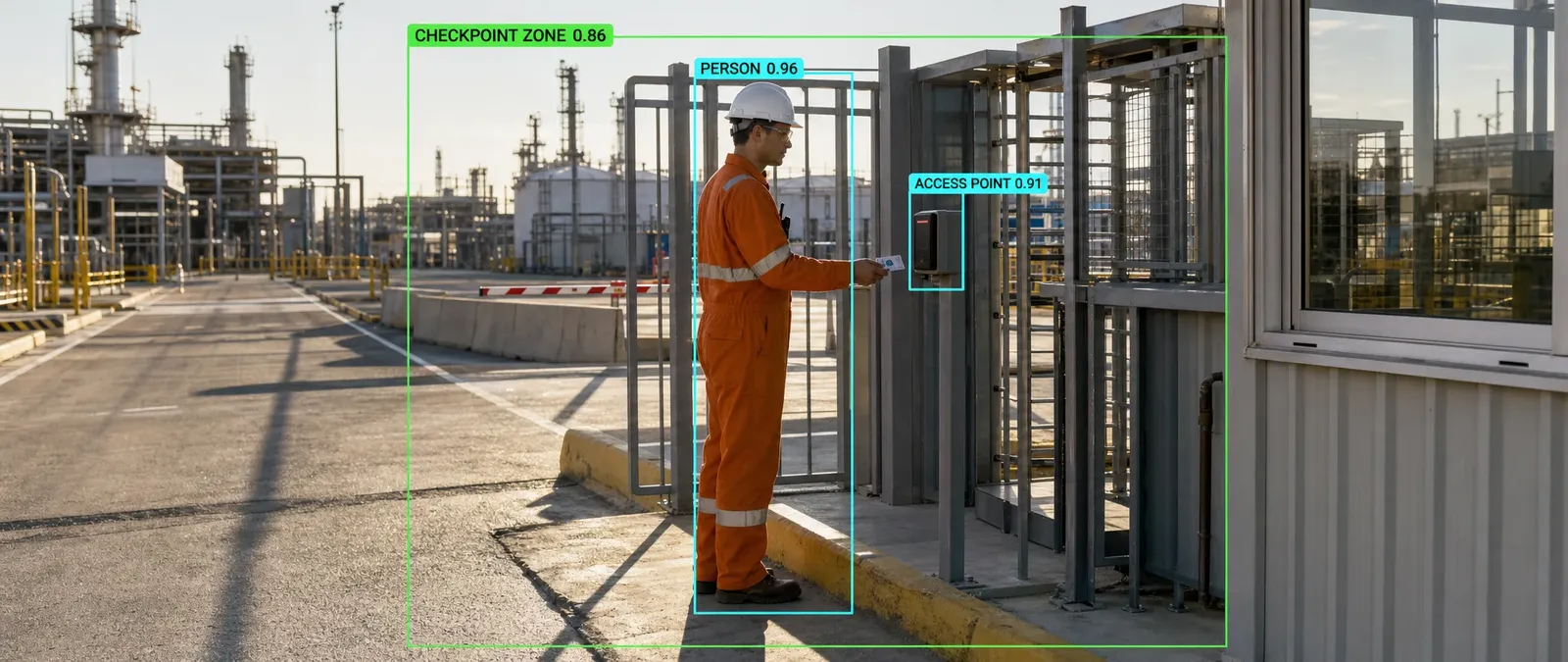 Access events · accreditation · authorized review
Relate access events to authorized personnel or accreditation sources so responsible staff can review candidate matches and exceptions.
Capture quality, lighting, occlusion, record validity and integration permissions must be checked for each checkpoint.
Authorized staff confirm or reject candidate matches under the site workflow. A visual match does not grant entry permission.
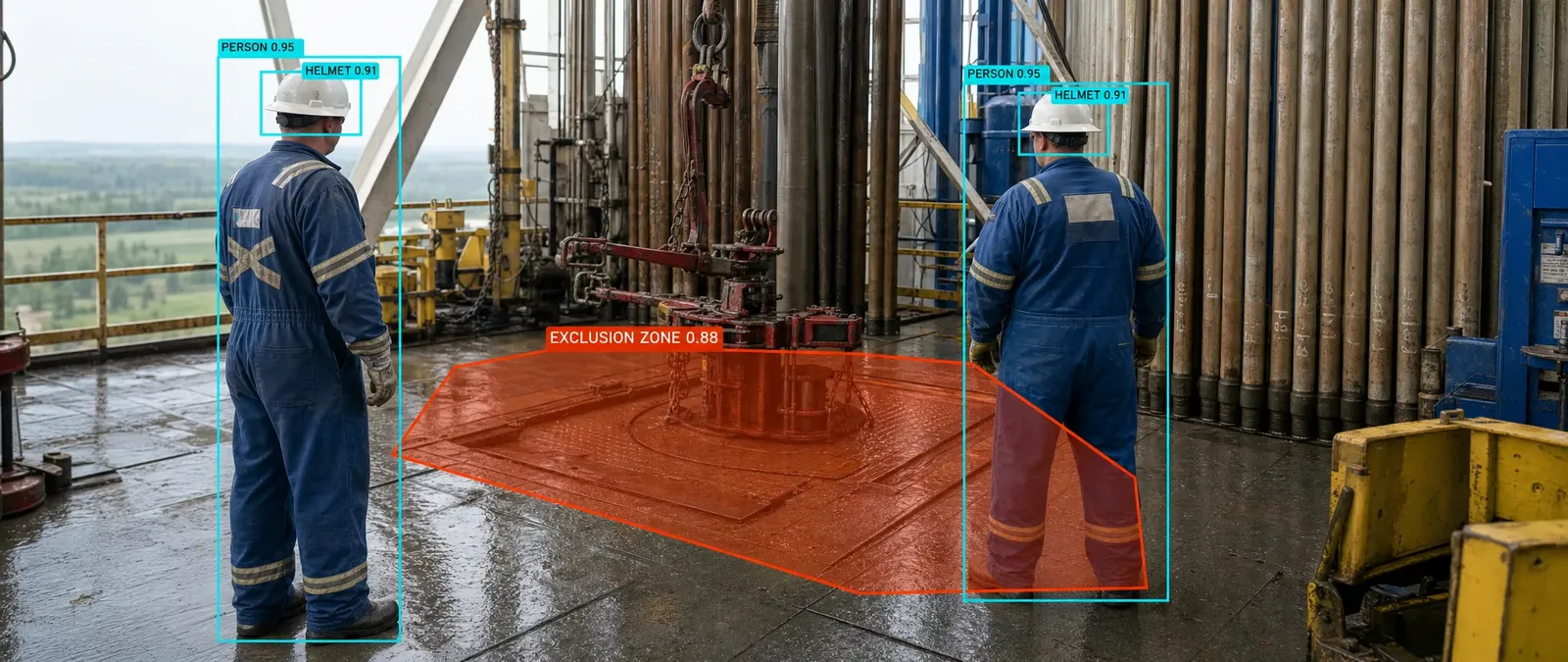 Rig floor · drill floor · PPE · restricted zones
Relate personnel presence, visible PPE and entry into configured zones to the drilling stage, so events can be reviewed alongside available equipment signals.
Video can show presence, movement and visible PPE subject to camera view, lighting and occlusion. Well state, pressure, load and alarms come from site instrumentation and systems.
Drilling supervisors review evidence and coordinate actions under current procedures, permits and safety barriers. Visual analysis does not replace safety systems or controls.
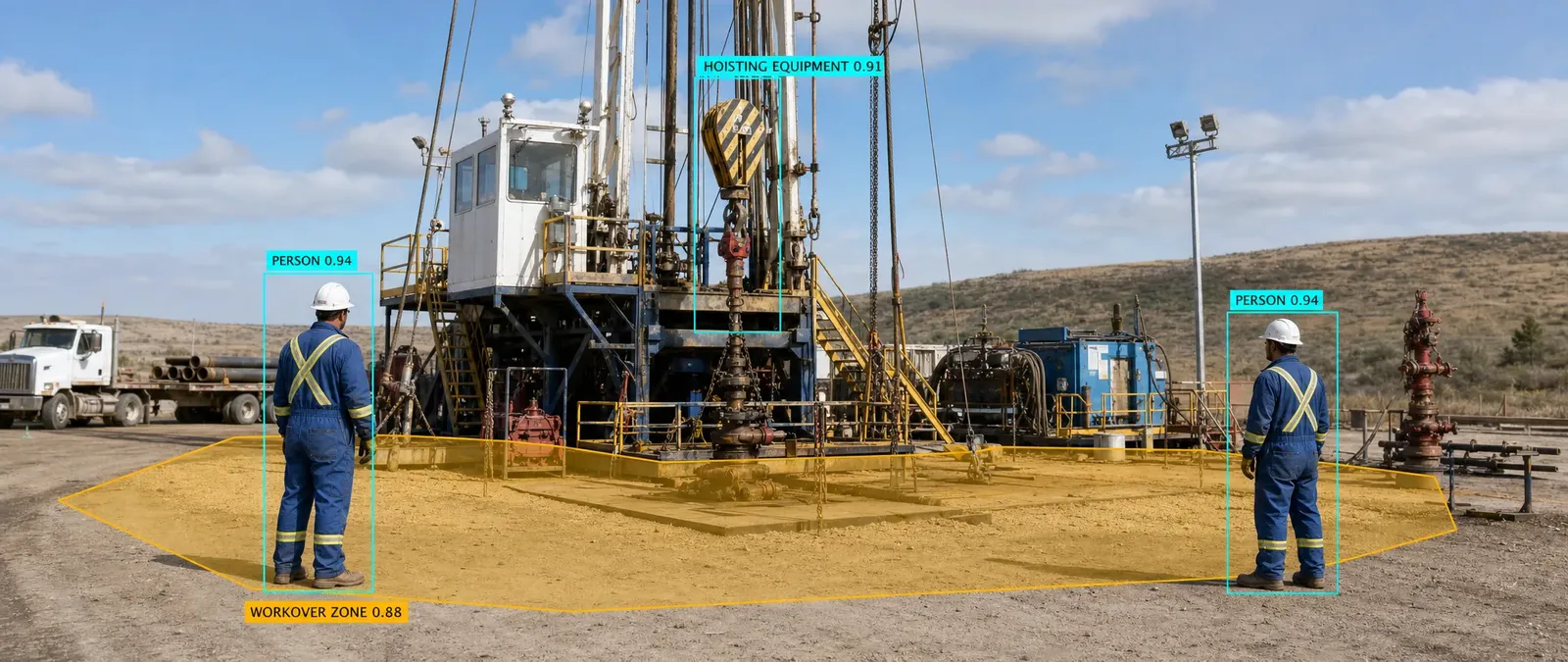 Well intervention · rig · hoisting · work areas
Organize visible crew events and access conditions around workover maneuvers, linking them to the asset and intervention stage.
Presence in defined zones, visible PPE and entry or exit sequences can be reviewed where coverage is adequate. Load, pressure and well state depend on instrumentation.
Operations and safety teams validate findings and decide responses under intervention procedures and work permits; vision does not replace critical controls.
Conceptual images from the reference material; they do not represent installations or customer results.
See how people, zones and visible conditions can be tied to evidence for operational review.
Video · sound available · controls enabledRelate sequences and visual signals to the context needed to review field events.
Video · sound available · controls enabledAOI preserves each data source and aligns available inputs by zone, asset and period without treating visual observation as an instrument measurement.
Cameras, models, processing and integrations are sized for the use case, coverage and available infrastructure.
Selection depends on the signals and decisions agreed for the site.
People, PPE and defined areas.
Observable activity, sequences and timing.
Radiometric temperature profiles.
Agreed counts and visual conditions.
Interactions from configured views.
Presence and access with authorized sources.
Agree on the asset, maneuver, decision and acceptance reference; synchronize video, radiometry and OT signals; test variations in load, lighting, occlusion, environment and data gaps. For classified areas, site engineering must define suitable equipment, mounting, power, network and safe access. No certification for explosive atmospheres is assumed. Existing safeguards and DCS/PLC controls retain control authority; any write or actuation requires separate engineering, permissions and validation.
Review available imagery, maneuvers and sources to agree on a focused pilot and acceptance criteria before expanding scope.
Asset, maneuver and operational owner.
Coverage, references, signals, permissions and criteria.
Evidence and usefulness with site teams.